 EN
EN

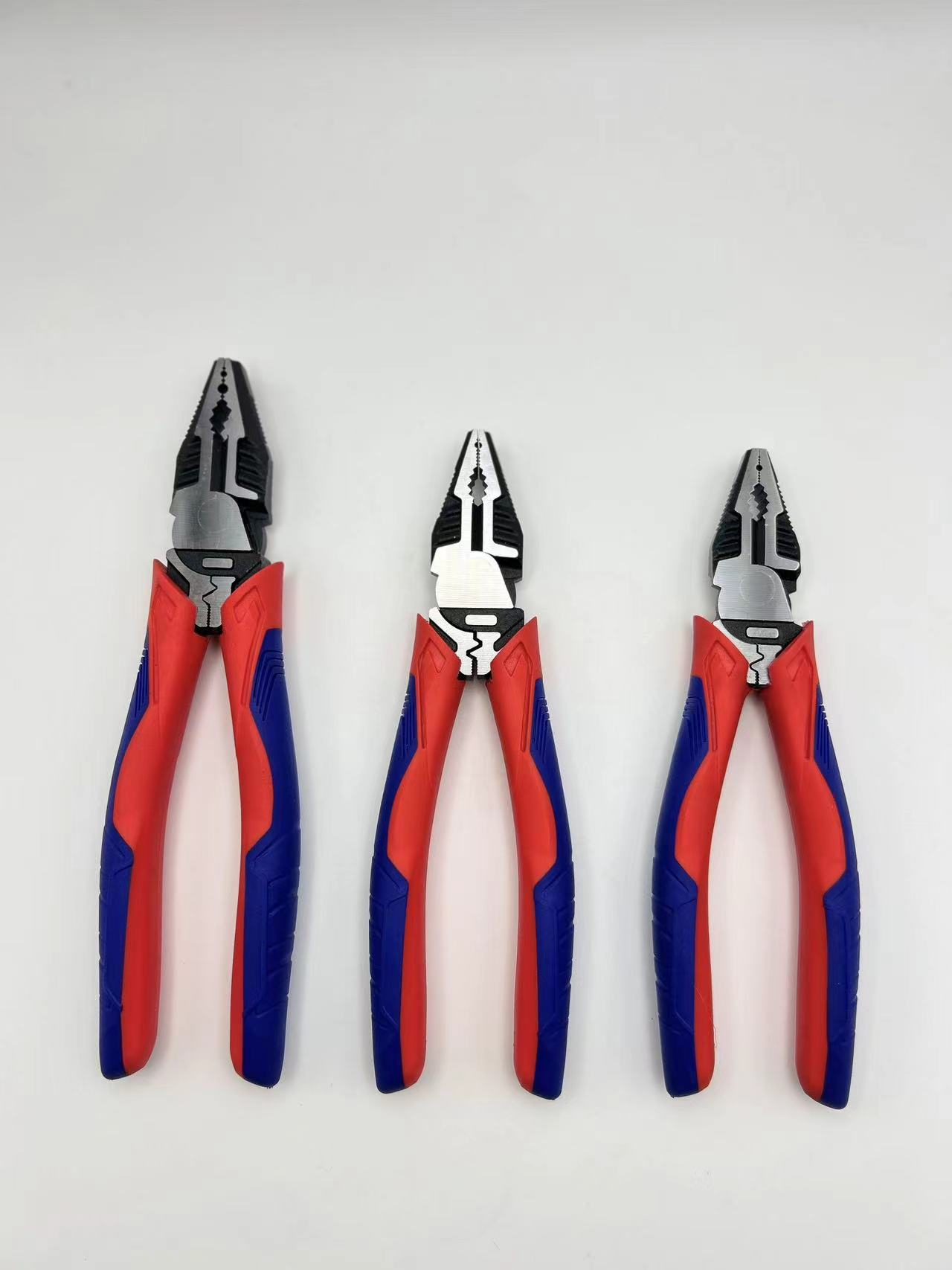
Procurement teams evaluating industrial hand tools often ask which physical traits separate a dependable tool from a short-lived one. A well-made combination pliers starts with measurable structural markers rather than marketing claims. Buyers who learn to read those markers reduce replacement cost, lower worksite injury risk, and keep production lines running without interruption. This guide explains the structural quality signals that matter before any purchase order is placed, so specifiers can judge a tool by what they can see, measure, and test on the bench.
Jaw Geometry and Cutting Precision
Precision-ground jaw faces
The first marker a buyer should inspect on any combination pliers is the jaw face. Precision-ground, machined jaws hold flat surfaces and consistent tooth depth, so the tool grips without slipping under load. Poorly finished jaws crush wire instead of holding it, which damages terminals and creates rework for the electrician. A hardened jaw also resists the brinelling that appears after repeated high-force grips on hardened fasteners. For distributors, jaw consistency across a batch is what lets crews trust the tool on every connection they make.
Induction-hardened cutting edge
The cutting edge of quality combination pliers is treated separately from the body. Induction hardening heats only the cutting lip and quenches it rapidly, producing a localized hardness near 58–62 HRC while the joint area stays tougher. That gradient prevents the brittle fracture a fully hardened blade would suffer under shock. Buyers should ask suppliers for the exact hardening method, because a soft edge dulls within weeks on hard-drawn copper and steel wire, raising consumable cost and slowing the line. Field crews should avoid using the jaw as a hammer or pry bar, since side shock loads the hinge in a direction it was never built to take and accelerates wear. A quick edge check with soft wire each month catches a dulling lip before it ruins a terminal.
The Pivot Joint and Force Transfer
Riveted pivot construction
Force travels from the handle through the pivot to the jaw, so the pivot joint decides how much effort reaches the work. A riveted pivot on combination pliers keeps the halves aligned under continuous squeeze, limiting side play that wastes force and loosens the tool. Loose pivots let jaws drift apart and nick conductors during stripping. ISO 5742 specifies dimensional and free-play tolerances for pliers, giving buyers an objective check when comparing samples from different factories on the same quote.
Tensile load and torque handling
Combination pliers are rated for a limited tensile load; exceeding it bends the joint or cracks the jaw near the root. Understanding the torque path helps buyers match the tool to the wire gauge and fastener size on site. For heavy round stock, a dedicated water pump pliers or bolt cutter reduces strain and extends service life. ANSI and ISO hardness references help specifiers confirm the steel absorbs the expected load without permanent set in daily use. Buyers should also brief users to cut at the jaw base, not the tip, where leverage is weakest. Cutting at the tip multiplies torque on the hinge and invites cracking, so proper technique preserves the tool and shields the worker from snap-back.
Material — Chrome-Vanadium Steel
Drop-forged CR-V body
When combination pliers use a drop-forged CR-V body, the grain flow follows the stress lines of the jaw, raising resistance to chipping at the cutting edge. Chrome-vanadium steel earns its place in industrial hand tools through a hardness-toughness balance plain carbon steel cannot match. Jusheng Tools applies high-pressure forging and hand sanding on its industrial lines, a process that removes surface defects before hardening. That discipline shows in fewer field failures and steadier batch quality for resellers.
Hardness HRC and corrosion resistance
Beyond the HRC number, the steel must resist rust in humid warehouses and coastal job sites. A chromed or phosphated finish slows corrosion and keeps the pivot moving freely. Buyers should verify a stated hardness with a sample test rather than trust a catalog claim, since pliers that look identical can hide different heat treatments. Consistent hardness across a shipment protects both the end user and the distributor's reputation in the field over time. A light film of oil on the pivot after cleaning keeps motion smooth and blocks rust creep. Store tools dry and off concrete floors, since moisture wicks upward and pits the joint. Such routine care extends service life far more than any single material claim printed on the box.
Handle Ergonomics and Anti-Slip Grip
Ergonomic handle and grip span
An ergonomic handle on combination pliers spreads compressive force across the palm and shortens the grip span, reducing hand fatigue for electricians who make hundreds of connections daily. A regional distributor serving electrical contractors saw return requests climb until the team traced complaints to oversized handles. Switching to a shorter grip span cut those returns and lifted reorder rates within a season. When the handle fits the hand, the operator applies more controlled force with less effort and better cut quality.
Anti-slip coating and insulation rating
Buyers specifying insulated combination pliers should confirm the rating label and the dual-color inner layer that reveals damage. For electrical work, the grip must stay secure with oily or sweaty hands, so an anti-slip coating matters. Where live conductors are present, insulated handles rated to IEC 60900 (1000 V) and compliant with NFPA 70E and OSHA 1910.335 protect the worker. Proper insulation, combined with correct use, is the last line of defense against arc and shock exposure on site.
Buying on structural markers beats buying on price alone. A trustworthy combination pliers shows precision-ground jaws, an induction-hardened cutting edge, a tight riveted pivot, a drop-forged CR-V body, and an ergonomic anti-slip handle. Inspect a random sample, confirm the ISO and ANSI references, and train users on load limits and routine maintenance. Distributors who apply this checklist ship fewer returns and build stronger, longer relationships with professional buyers across industrial markets.
Frequently Asked Questions
Question
What physical defects show a pliers is low quality?
Answer: Look for uneven jaw faces, visible play at the pivot, and soft cutting lips that dent under light pressure. Loose rivets, off-center grinding, and rust spots signal weak process control. Inspect a random sample from the batch, not a showpiece, because batch consistency decides field performance. Request the hardness and tolerance references before ordering, and reject units that fail the free-play check at incoming inspection.
Question
Why does induction hardening matter for cutting edges?
Answer: Induction hardening focuses heat on the cutting lip of quality combination pliers, reaching about 58–62 HRC while the joint stays tough. A blade hardened through its full body would snap under shock. Localized hardening keeps the edge sharp through thousands of cuts on copper and steel wire. Buyers should confirm the method with the supplier, since a soft edge fails fast on hard-drawn conductors and raises replacement cost.
Question
How should a buyer verify the pivot joint?
Answer: Open and close the tool and watch for side play or a gritty feel at the joint. A tight riveted pivot returns smoothly and keeps the jaws aligned under load. Compare several units from one batch, because drift between samples reveals loose process control. Pair the check with the ISO 5742 free-play limit to set an objective acceptance standard for incoming inspection at the warehouse.
Question
Which steel grade suits industrial cutting tools?
Answer: Chrome-vanadium steel, marked CR-V, gives the hardness-toughness balance industrial cutting needs. Drop forging aligns the grain with jaw stress lines, raising resistance to chipping at the edge. Plain carbon steel costs less yet loses edge and cracks sooner under load. Verify with a sample hardness test rather than a catalog claim, and confirm corrosion resistance for humid or coastal storage conditions.
Question
Can insulated handles replace electrical safety procedures?
Answer: No. Insulated grips rated to IEC 60900 protect only against contact with live parts up to 1000 V and must pair with NFPA 70E and OSHA 1910.335 controls such as lockout. Damaged insulation loses protection, so inspect the dual-color layer before each use. Handles are the last defense, never a substitute for de-energizing circuits and following site electrical safety rules.