 EN
EN

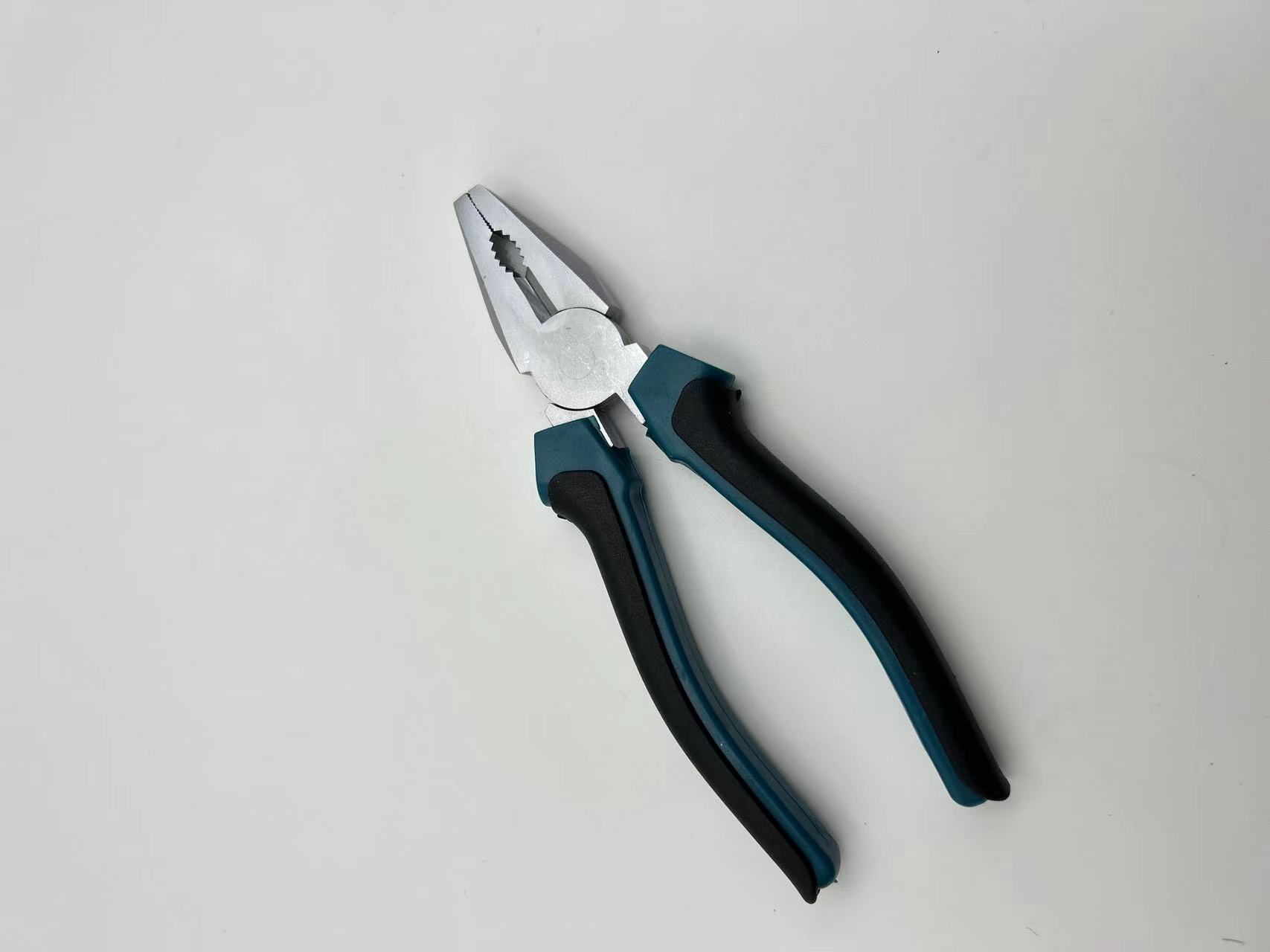
Procurement teams often ask whether a single general-purpose tool can replace a full industrial kit. Combination pliers sit at the center of that debate because they grip, cut and bend in one body. The honest answer depends on load, torque and the material being handled. The sections below examine the structural reasons behind their limits and show where a dedicated tool is the safer choice.
Understanding Load and Torque Limits in Combination Pliers
A general-purpose combination pliers earns its place through versatility, yet that versatility has a mechanical price buyers should weigh before overload.
How the pivot joint and jaw geometry share the load
A standard combination pliers model uses a single pivot joint where two half-bodies meet. Force applied at the handle travels through that pivot and concentrates at the jaw tip. Longer handles add leverage, but the pivot becomes the stress point. Once torque at the pivot exceeds the steel's shear capacity, the joint spreads and the jaws lose alignment. The design trades raw power for control and a manageable grip span.
Why forged chrome vanadium steel sets the real ceiling
High-pressure forged chrome vanadium steel, marked CR-V, gives the tool its working ceiling. Induction-hardened cutting edges reach higher hardness on the HRC scale near the blade while the body stays tougher. ISO 5744 defines hardness and test methods for pliers, and ISO 5742 covers performance. A drop-forged body resists cracking better than a cast one, but no forging removes the leverage limit set by jaw length. Hardness protects the edge; it does not raise the torque the pivot can survive.
When Combination Pliers Fail Under Heavy Duty
Field returns and line stoppages usually trace back to a mismatch between task and tool class. Recognizing the early signs prevents injury and protects the procurement budget.
The failure modes procurement teams should recognize
Under heavy duty, the common failure modes are jaw spread, pivot loosening, edge chipping and handle bowing. Edge chipping appears when the tool cuts hardened wire above its rated tensile load. Pivot loosening follows repeated overload, letting the jaws drift and slip on the work. A slipping jaw is dangerous because the hand can shoot forward. ANSI and ISO standards grade pliers by category, so matching the tool class to the task prevents most failures before they start. Regular inspection catches jaw spread and pivot play before sudden failure.
A worksite scenario: the cost of one wrong-tool order
A regional distributor once bundled general hand tools into a contract for a panel-assembly line. The crew used the combination pliers to twist heavy grounding conductors that needed sustained torque. Within weeks the pivot joints loosened and jaws drifted, slowing the line and triggering returns. Switching that line to dedicated linesman pliers restored alignment and cut rework. The lesson: buying for price alone ignored the load profile, and the correction cost more than specifying the right tool upfront.
The Risk of Using the Wrong Tool
Choosing the wrong instrument rarely stays neutral: the cost appears as injury, downtime and failed compliance checks a simple specification step could avoid.
Injury, downtime and compliance gaps under OSHA and NFPA 70E
Reaching for the wrong hand tool turns a routine job into a hazard. A tool that slips under load can pinch or lacerate the hand, and an unplanned stoppage on a production line drains margin. OSHA 1910.335 requires protective equipment for electrical work, and NFPA 70E sets the arc-flash and shock-risk controls for tasks near live parts. A non-compliant tool choice creates a citation risk on top of the safety risk. Specifying a rated combination pliers for the task protects workers and keeps the audit trail clean.
How insulation rating and live-working rules apply
When work happens near energized conductors, the insulation rating decides whether a tool belongs on site. IEC 60900 defines the 1000 V rating for live-working insulated hand tools, and only tested insulated versions carry that mark. A standard gripping tool without that rating must stay away from live circuits. Corrosion resistance and an anti-slip ergonomic handle help in damp or oily conditions, but they never substitute for a verified insulation class. Match the rating to the voltage before the job begins.
Comparing Combination Pliers With Linesman Pliers and Bolt Cutters
A clear strategy assigns each class to the load it was built to carry, keeping every tool inside its design envelope.
Where dedicated linesman pliers outperform
Dedicated linesman pliers add a flat gripping nose and heavier pivot built for sustained twisting and pulling. Their jaw geometry spreads load across a wider face, so they hold conductors without the drift seen in a general tool. The general-purpose combination pliers still earns its place for light assembly and mixed tasks, but continuous heavy torque belongs to the dedicated design.
Bolt cutters use long handles and a compound lever to multiply force at the blade, reaching tensile loads far beyond any pliers class. They are built to shear hardened rod and chain, not to grip. Specifying them for cutting saves the gripping tool from edge chipping and joint spread. For upkeep, wipe and lightly lubricate the pivot after use, and store dry to protect the induction-hardened edge. A diagonal cutter trims fine wire, while a needle-nose model reaches tight terminals; keep each within its class.
Summary
Buying the right tool starts with the load profile, not the catalog page. Combination pliers handle gripping, light cutting and bending across mixed tasks, but their single pivot and moderate leverage cap the torque they can survive. Dedicated linesman pliers and bolt cutters exist because heavy duty demands a stronger load path. Inspect the pivot, verify the hardness mark, and match the insulation rating to the job. Safe, repeatable results come from respecting each tool's design limit.
Frequently Asked Questions
Question
Can combination pliers replace bolt cutters for heavy cutting?
Answer: No. Bolt cutters multiply force through a compound lever and long handles, reaching tensile loads a gripping tool cannot match. The general tool's single pivot and short leverage cap its cutting force, so hardened rod or chain will chip the edge or spread the jaw. Specifying a bolt cutter for shearing protects the gripping tool and prevents sudden failure on the job.
Question
Why does the pivot joint limit the torque a tool can apply?
Answer: The pivot is where handle force concentrates before reaching the jaw. Once torque at that point exceeds the steel's shear capacity, the joint spreads and the jaws drift out of alignment. A wider or heavier pivot raises the limit, which is why dedicated linesman pliers outlast a general tool under sustained twisting. The geometry, not the handle length, sets the true ceiling.
Question
How should buyers inspect a hand tool before putting it into service?
Answer: Check the pivot for play, confirm the hardness mark from ISO 5744, and look for cracks near the induction-hardened cutting edge. Verify the insulation rating for any live-working task and reject tools without a clear class. A quick daily inspection catches jaw spread early and prevents a slip that could injure the hand or stop a production line.
Question
What insulation rating is required when working near energized conductors?
Answer: IEC 60900 defines the 1000 V class for live-working insulated hand tools, and only tested versions carry that mark. OSHA 1910.335 and NFPA 70E require protective controls near live parts, so a non-insulated tool must stay clear. Match the rating to the circuit voltage before starting, and retire any tool with damaged insulation immediately to avoid shock risk.
Question
Which task should stay with dedicated linesman pliers instead of a general tool?
Answer: Sustained twisting and pulling of heavy conductors belongs with dedicated linesman pliers. Their flat nose and heavier pivot hold alignment under continuous torque, while a general tool drifts and loosens. Electricians splicing grounding wire gain stability and speed from the dedicated design. Reserve the general tool for light assembly and mixed tasks where extreme force is not required.