 EN

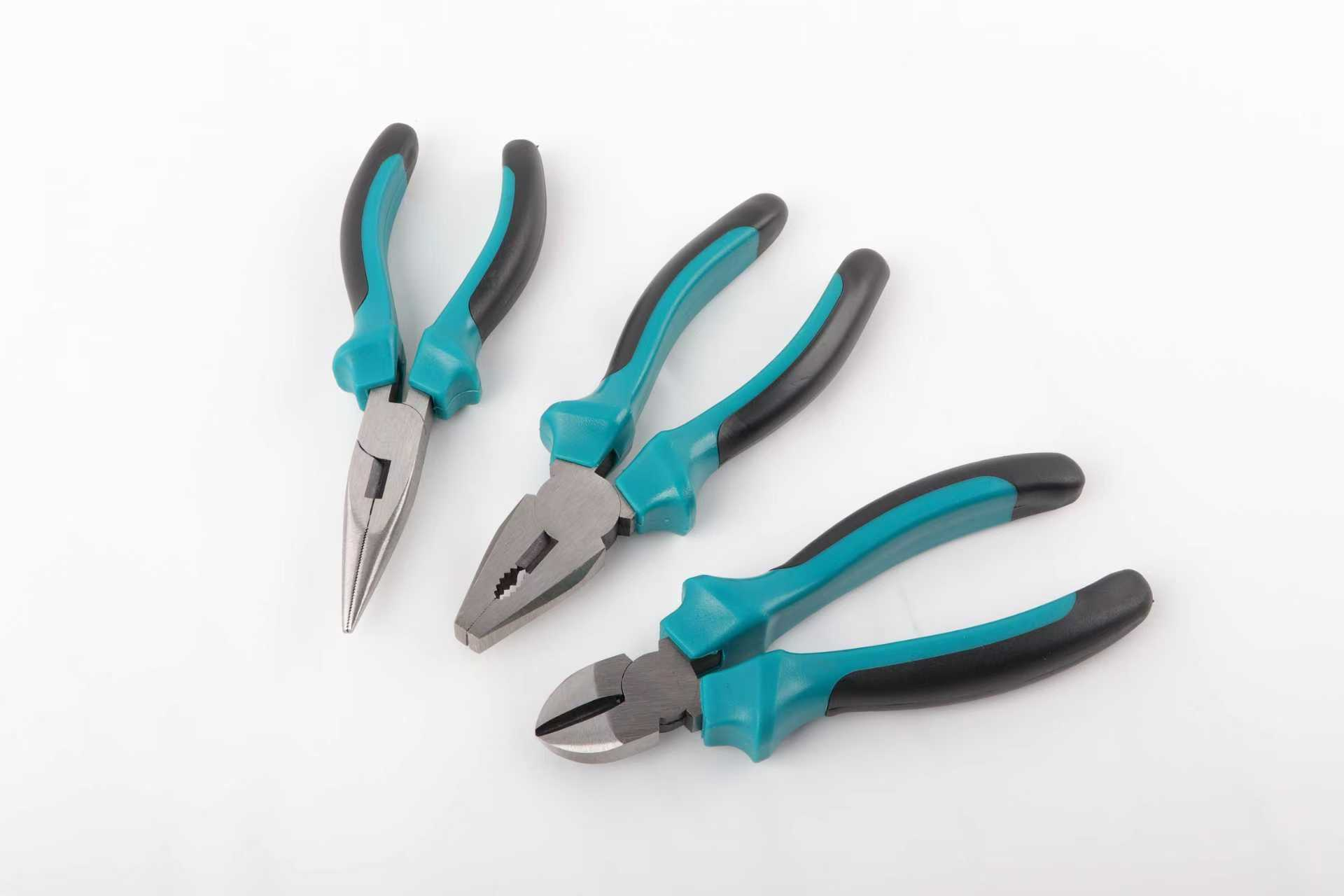
Walk any active jobsite and the tool crib tells a story. Some pairs still open smoothly after a year of abuse; others sit in the corner with chipped edges and a loose pivot, waiting for the bin. Choosing durable pliers for heavy-duty construction means knowing what survives drops, twists, grit and galvanized wire.
What A Construction Site Really Does To Hand Tools
The bent-jaw job nobody budgets for
A mid-sized electrical contractor in the Midwest ran hand tools across six crews, and purchasing bought on unit price. For two seasons the numbers looked fine. Then a routine rebar-tying job turned into a problem: a batch of combination tools started twisting at the jaws within weeks. Crews adapted with cheater bars and brute force, which finished the job and quietly finished the tools. Replacements soon ran at double the budgeted rate, and one crew borrowed lineman's pliers from a neighboring trade.
The problem was not the crew. The bodies had been stamped from softer stock, and the pivot area had never been properly hardened, so every prying task drove the jaws further out of alignment. The fix started with a conversation about steel and heat treatment, followed by sample testing against real tasks: cutting tie wire, twisting, pulling staples. Tools that passed went into service, return complaints faded, and the tool budget behaved like a budget. On site, durability is a specification, not a hope.
Why the lowest quote usually costs more
Unit price is a comfortable number because it fits in a spreadsheet cell. Total cost is messier: replacement cycles, downtime while a crew waits for a fresh box, and the quiet productivity tax of tools that slip and bind. A pair of heavy-duty pliers that costs twenty percent more but lasts three seasons beats a cheaper pair replaced twice a year. Construction hand tools also travel — truck beds, tool bags, boot floors — so finish quality and corrosion resistance matter as much as the steel grade.
Inside The Tool: Steel, Heat Treatment And Design
Forged steel, tempering and the hardness balance
Durable pliers start as drop forged steel, not cast or lightly stamped stock. Drop forging hammers heated steel into shape under high pressure, which lines up the grain flow along the tool's profile; when a crew twists a tool against a stubborn fastener, stress travels with that grain. Heat treatment is where durability is won or lost: quenching locks in hardness, tempering pulls it back so the steel flexes instead of shattering. Cutting edges are commonly hardened into the mid-50s HRC and above, while tempered jaws hold their edge and bodies are usually pulled back toward the low-40s HRC for toughness. Induction hardening takes the same logic local: only the jaw and cutting edge get the hard treatment, so the rest of the tool absorbs shock.
Pivot bolts, springs and handles built for gloves
Design details decide how long precision lasts. The pivot bolt needs a fit tight enough to eliminate wander but free enough to open one-handed. Return springs should snap the tool open after a season of dust. Handles matter: an ergonomic grip with a textured coating resists spinning in a gloved hand and cuts squeeze force on repetitive cutting-edge work. Chrome vanadium bodies add corrosion resistance for construction hand tools that live on the jobsite. None of these show up in a unit price; all of them show up by hour eight of a shift.
Matching The Pattern To The Task
Lineman's, needle nose and cutting patterns
Durable pliers earn their keep when the pattern matches the task. Lineman's pliers combine a gripping jaw, a cutter and a crimper, which is why they dominate service vans. Needle nose patterns reach into panels where a broad jaw never fits. Diagonal cutters exist to cut; using them to pry is how edge chipping starts. Slip-joint and water pump patterns handle oversized fittings, and bolt cutters belong on the material list for rebar and chain work. A mixed specification usually outperforms one generic purchase.
Insulated handles and electrical work safety
Insulated handles are not a color choice. Tools rated under IEC 60900 or EN 60900 carry marking that tells an electrician the insulated handles have been tested for live work up to a stated voltage, typically 1000 V AC and 1500 V DC, and OSHA guidance under 29 CFR 1910 expects insulated tools where shock hazards exist. Two rules matter: buy from sources that can produce batch-tied test documentation, and inspect before every use — nicks and wear through the coating retire a tool from live work immediately.
Field Checks, Use And Maintenance
A two-minute inspection before the shift
Open and close the tool: the pivot bolt should move smoothly with no play at the jaws. Hold it to the light — jaws should meet evenly. Check the cutting edge and tempered jaws for chips or roll-over, flex the handle for cracks near the molded joint, and test the return spring. Any tool that fails one of these checks comes off the truck before it fails on a ladder.
Habits that keep heavy-duty pliers working
Use and care stretch service life further than any purchase decision. Match the tool to the task, keep cheater bars off the handles, and never expose the cutting edge to hardened materials like piano wire unless the pattern is rated for it. After dusty or wet work, wipe the tool down and put a drop of light oil on the pivot; store tools dry so plating and corrosion resistance last. Retire tools with mushroomed faces or cracked handles instead of handing them to the next crew.
Picking durable pliers for heavy-duty construction comes down to three habits: buy forged, heat-treated steel instead of stamped stock, match each pattern to the task, and inspect tools before they fail on a ladder. None of that requires an engineering degree — only the willingness to ask how a tool was made before committing a whole fleet to it.
Frequently Asked Questions
Question
How can tool durability be verified before a bulk order arrives?
Answer: Ask for pre-shipment samples and test them against real tasks — cutting galvanized wire, twisting, prying — instead of trusting the spec sheet. Check pivot play, jaw alignment, edge condition and handle fit on every sample. A supplier confident in its production welcomes destructive testing; one that pushes back with paperwork is answering a different question. Sample testing costs days and routinely prevents containers of tools that fail in the first week of service.
Question
What does the HRC rating on a tool certificate actually mean?
Answer: HRC measures surface hardness on the Rockwell C scale, and it matters most at cutting edges. Industrial tools commonly run mid-55s HRC and above at the edge, with bodies tempered toward the low-40s HRC for toughness. Treat the number as a starting point, not proof: hardness varies across a batch, and a certificate without batch records verifies little. The practical check is a hardness test on a retained sample plus field trials.
Question
Are insulated handles suitable for every electrical task?
Answer: No. Insulated handles rated under IEC 60900 or EN 60900 are tested for live work up to a stated voltage, commonly 1000 V AC and 1500 V DC, and that protection depends on the coating staying intact. Nicks, cuts and worn spots retire a tool from live work immediately. Insulated tools also do not replace lockout procedures, voltage testing or other OSHA-required practices — they are one layer of a safety system, never the whole system.
Question
How should construction pliers be stored between jobs?
Answer: Dry storage protects the finish and the pivot. Wipe tools down after wet or dusty work, add a drop of light oil to the pivot, and keep them out of standing water — truck beds and open buckets are where corrosion starts. Store cutting edges protected so they do not chip against other steel. A tool bag or crib with dividers costs little and prevents the loose-tool chaos that turns good tools into bent-jaw spares within a single season.
Question
Which pattern suits twisting and cutting tie wire?
Answer: Lineman's patterns cover both jobs in one tool, which is why they dominate service vans: the jaw grips and twists while the side cutter handles tie wire. For bulk work, pair them with diagonal cutters dedicated to cutting, since using a combination jaw to slice wire dulls the edge. Needle nose patterns belong in panels, not in rebar-tying duty. Matching pattern to task keeps every tool doing the work it was designed for.