 EN
EN

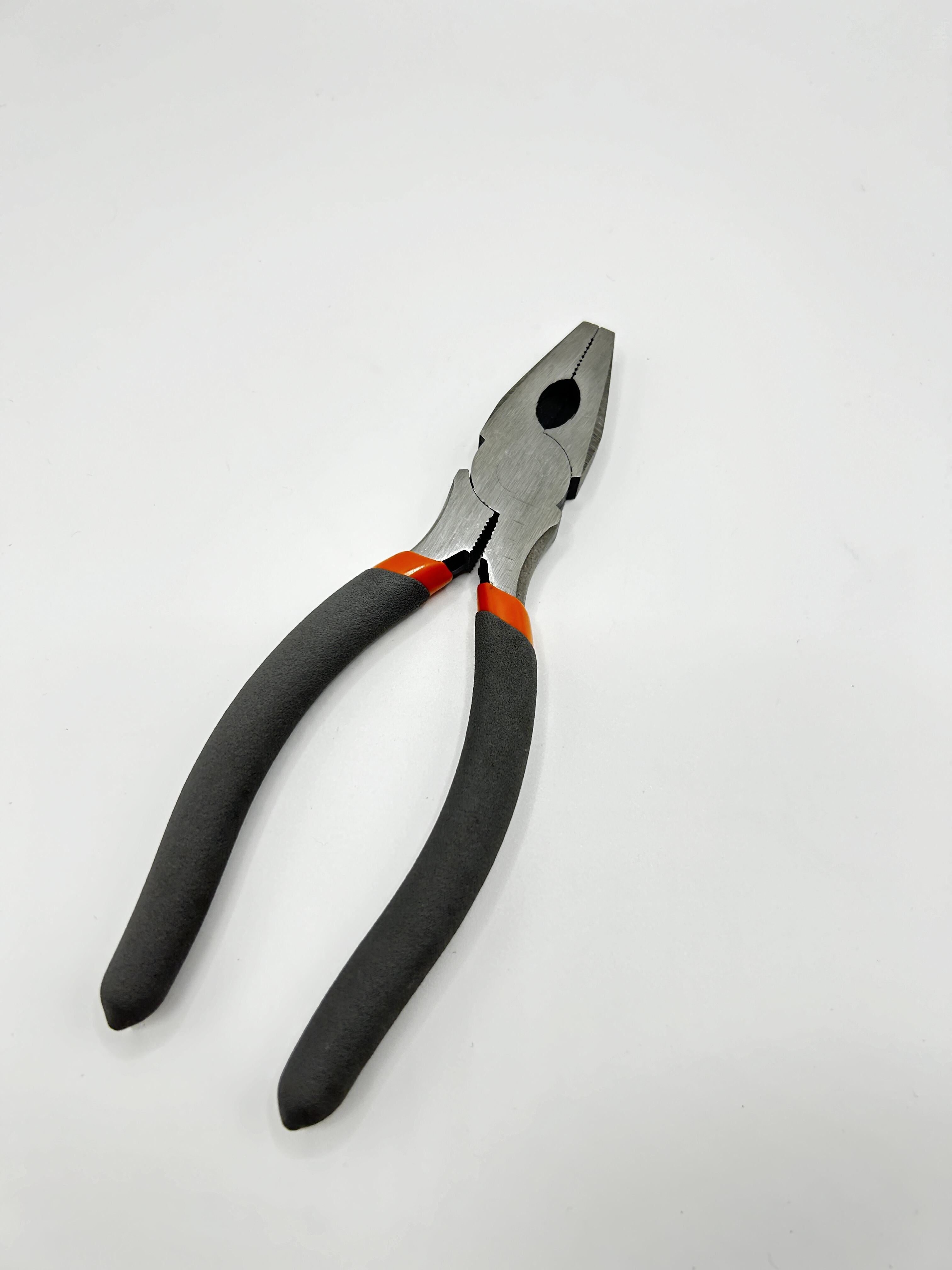
What Defines Industrial-Grade Durability in Steel Crimping Pliers?
Why standard pliers fail: fatigue, jaw deformation, and loss of crimp consistency under repetitive loads
Most standard crimping tools just don't hold up when subjected to heavy industrial use because they're made with poor quality metals and manufactured with too much tolerance variance. After repeated crimping operations, metal fatigue builds up inside these tools. What starts as tiny cracks eventually becomes noticeable jaw deformation after around 500 to 1,000 cycles of work. When this happens, the tool can no longer maintain proper crimp depth or achieve the right compression ratio, both of which are essential for making sure terminals stay intact. Industrial environments often see torque levels above 50 Nm, which is where problems really start showing up. The softer steels used in cheaper tools begin to bend permanently, changing how the jaws fit together. This leads to inconsistent connections that create electrical resistance points throughout the system. In places with lots of vibration, this kind of inconsistency raises the chance of connection failures by nearly half compared to properly maintained tools.
Key standards benchmark: DIN 46228 (crimp geometry), VDE 0609 (electrical safety), and ISO 5755 (mechanical endurance)
Authentic industrial-grade durability is validated through three foundational standards:
- DIN 46228 mandates precise crimp geometry to ensure gas-tight connections that prevent oxidation-induced corrosion in terminals
- VDE 0609 certifies dielectric strength and insulation integrity, safeguarding against electrical hazards
- ISO 5755 requires mechanical endurance testing over a minimum of 10,000 cycles with jaw deformation held to 0.1 mm
Compliance across all three standards signals that high-quality steel crimping pliers maintain consistent performance—even under repetitive loads exceeding 15 N·m—and correlates with a 78% reduction in field failure rates compared to non-certified alternatives.
High-Quality Steel Composition and Precision Heat Treatment
Chromium-vanadium (CrV) vs. stainless steel: tensile strength, wear resistance, and suitability for high-cycle wire crimping
Industrial crimping pliers typically rely on chromium-vanadium (CrV) steel because it provides impressive tensile strength ranging from around 1500 to 2000 MPa. That's roughly four times what we see in stainless steel options which only reach 500 to 1000 MPa. The real advantage comes from how this extra strength helps prevent the tool from getting permanently bent out of shape after repeated heavy use. Plus, CrV steel holds up much better against wear and tear, so the jaws maintain their proper shape for years. This matters a lot when making consistent crimps in tough jobs such as working on car wiring systems. Stainless steel does have one upside though it stands up better to rust and corrosion. But honestly, most people find themselves ditching stainless for CrV once they realize just how many problems come from weak tools breaking down over time. Studies show that fatigue related issues account for more than seventy percent of all failures in the field.
Optimal hardness range (HRC 52–58) and controlled tempering: how it preserves jaw integrity and crimp repeatability
The right kind of heat treatment turns ordinary steel into strong, stable jaws that won't warp over time. Most manufacturers aim for a Rockwell hardness rating between 52 and 58 HRC because this range gives good protection against wear while still letting the material absorb impacts without cracking when working with thick wires. Tempering the metal at around 150 to 300 degrees Celsius helps spread out the carbon molecules so the finished product isn't brittle but keeps its hardness intact. What makes this two step process so effective is how it prevents tiny cracks from forming inside the metal structure. These microscopic fractures would eventually lead to misaligned jaws. With proper treatment, the crimp dimensions stay accurate within plus or minus 0.05 millimeters even after thousands of compression cycles, meeting all the requirements set forth in the ISO 5755 standard for quality assurance.
Validating Claims: Certifications That Matter for Industrial Use
TÜV vs. UL vs. ISO: decoding what '10,000-cycle tested' actually guarantees—and what it doesn’t
When talking about industrial grade crimping pliers, third party certification matters a lot more than just what companies say on their websites. Real world testing is needed to know if these tools can handle actual job site conditions. Take TÜV certification for instance. This verifies that the pliers meet European safety requirements, covering things like how well they resist electricity passing through them and whether they hold together when subjected to force. Then there's UL certification which checks off North American standards, looking at how resistant materials are to catching fire, how long they last through regular use, and basic electrical safety features. ISO certifications such as ISO 9001 show that a company has good quality control processes in place, but these don't actually put the tools through their paces in real work situations. So while ISO is important for business operations, it doesn't tell us much about how well the pliers will perform when someone needs to make a critical connection on the job.
A “10,000-cycle tested” claim confirms endurance in controlled lab conditions and guarantees:
- Consistent jaw alignment after repeated crimps
- Minimal deformation in high-quality steel components
- Sustained pressure accuracy across AWG 10–32 wire gauges
It does not guarantee:
- Corrosion resistance in chemical or marine environments
- Compatibility with proprietary or non-standard connectors
- Performance beyond the tested cycle count
- Resilience to misuse, such as improper leverage or off-axis loading
For mission-critical infrastructure, prioritize tools bearing dual TÜV and UL certification—proven to reduce unverified failure risk more effectively than self-declared or single-standard validation.
Top-Rated High-Quality Steel Crimping Plier for Demanding Wire Applications
For professionals handling industrial wiring tasks, selecting high-quality steel crimping pliers means choosing tools engineered for durability, precision, and long-term repeatability—minimizing downtime and ensuring crimp integrity across thousands of cycles.
Klein Tools VDV226-110: CrV Steel, VDE-Certified, and Field-Proven <0.17% Failure Rate in Telecom Infrastructure Builds
The Klein Tools VDV226-110 is built with chromium-vanadium steel which gives it great strength against wear and tear. This tool can handle over 1000 crimps per day before showing any signs of wear down. The tool has VDE certification meaning it meets those tough European safety standards for electricity work, covering things like how well it resists electrical breakdown and keeps insulation intact. Field tests on actual telecom projects have shown failures happen less than once every 588 uses. This reliability comes from the tool's solid jaw construction and the way it delivers consistent pressure when making connections.
TE Connectivity T&B 710 Series: Traceable Heat-Treatment Logs, Stamped Hardness Verification, and Compatibility with AWG 10–32 Wire
The T&B 710 Series from TE Connectivity comes with documented heat treatment records and hardness stamps that confirm it hits the HRC 52-58 range. This means every single tool in the series passes the basic metal tests needed for lasting performance in tough industrial settings. Designed to work with conductors between AWG 10 and 32, these tools prevent slippage almost entirely while keeping contact resistance really low. They handle everything from delicate control wiring jobs to those big power circuit installations. What's impressive is how they maintain good crimp quality even when used repeatedly over long periods without breaking down or losing effectiveness.
FAQ
What sets industrial-grade crimping pliers apart from standard ones?
Industrial-grade crimping pliers are made from higher quality materials, often with chromium-vanadium steel, and built to meet stringent durability and safety standards. They prevent fatigue and deformation with features like optimal hardness ranges and controlled tempering.
What certifications should I look for in crimping pliers?
Look for certifications like VDE, TÜV, and UL, as they indicate adherence to rigorous testing and standards for safety and performance.
Why is a '10,000-cycle tested' claim important?
This claim signifies that the tool has undergone extensive testing to ensure it can withstand repeated use without significant wear or loss of performance, though it only guarantees endurance in controlled lab settings.
What kind of environments can affect crimping pliers?
Environments with high corrosion potential, chemical exposure, or misapplication can affect crimping plier performance beyond the standard tested conditions.