 EN
EN

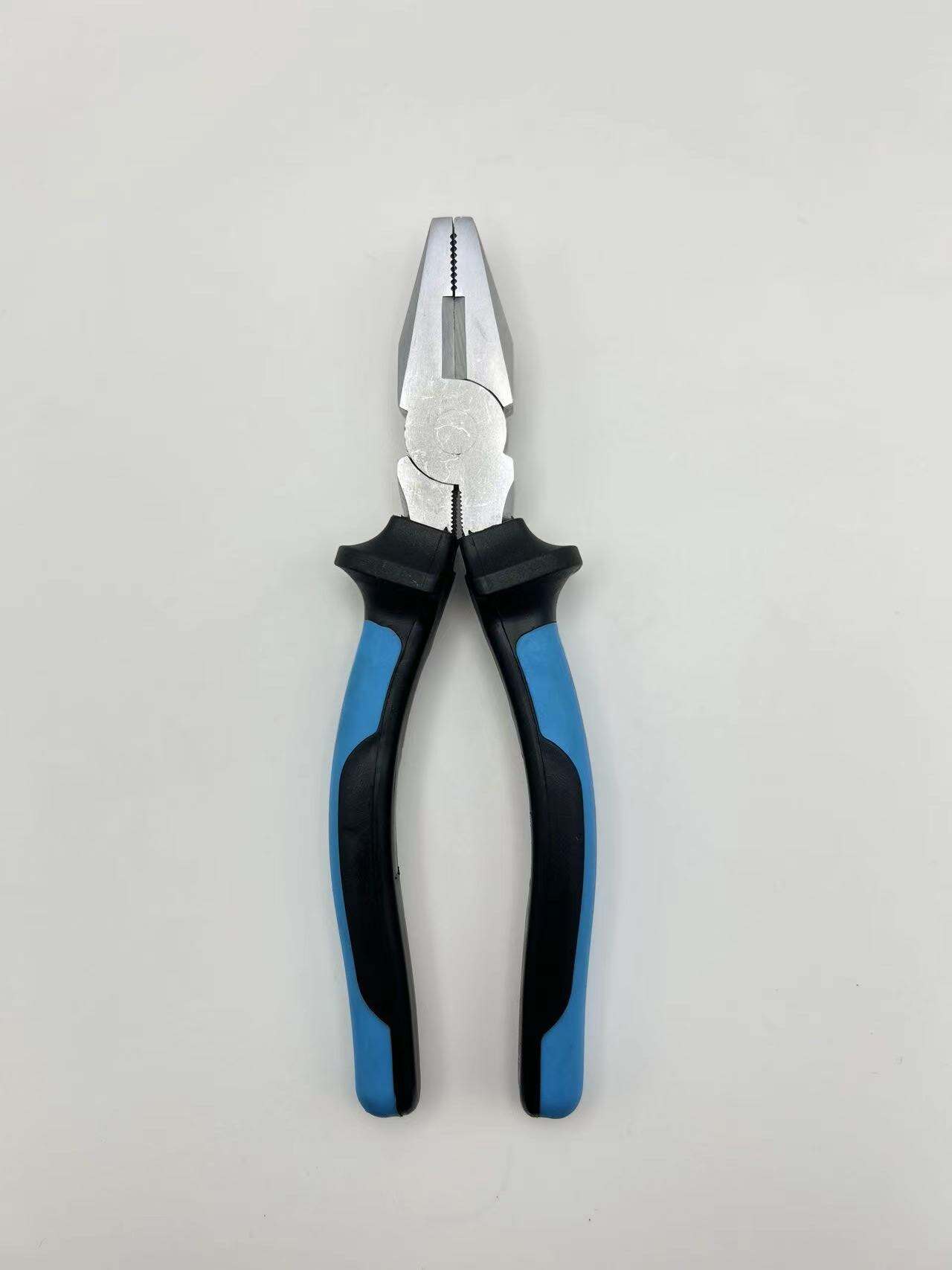
National Compliance: BIS Certification and IS 3650:1981 for Industrial-Grade Combination Pliers
Dimensional accuracy, hardness (HRC 48–54), and joint play tolerance (≤0.15 mm) per IS 3650:1981
Industrial combination pliers need to meet IS 3650:1981 standards set by the Bureau of Indian Standards. These specs cover everything from size accuracy to how well they work mechanically and what kind of materials go into them. The cutting edges should be aligned pretty closely, within plus or minus 0.3 mm. When it comes to the angle of the jaws, there shouldn't be more than 0.5 degrees of deviation. And those cutting radius measurements? They have to stay within tight limits too, around plus or minus 0.1 mm. There's also strict control over joint play, which needs to stay below 0.15 mm. Why does this matter? Because if there's too much movement at the joint, the tool wears out faster and doesn't grip as consistently. Forged carbon steel parts get treated to reach a hardness level between HRC 48 and 54. This balance makes sure the pliers can handle tough jobs without breaking while still keeping their cutting edge sharp. The tensile strength goes beyond 1200 MPa, something confirmed through proper material tests. Before getting certified, every tool has to pass rigorous endurance testing involving over 50,000 open and close cycles. This ensures they'll keep working properly even after months of heavy use in factories and electrical installations.
The ISI mark as the definitive proof of certified compliance with Indian professional tool standards
In India, the ISI mark stands as the only official sign that products meet standards set by IS 3650:1981. The Bureau of Indian Standards (BIS) requires this certification to show that each production run passes tests on size, material quality, and how well they work, including special checks for insulation properties in certain models. To get certified, factories must undergo yearly inspections, have samples checked monthly by outside experts, and include unique factory codes right on the product itself. Selling tools without proper certification violates the BIS Act from 2016. Imported goods that don't comply can be kept out of markets for up to two years plus fines apply. Most government contracts and legitimate electricians insist on seeing ISI marks when buying pliers. Workshops across the country regularly toss out any tool lacking proper certification during their regular safety checks. Anyone caught faking or misusing the ISI mark faces serious consequences through BIS monitoring systems.
Global Performance Benchmarks: ANSI/ISO Standards for Tensile Strength and Fatigue Resistance in Combination Pliers
Why forged carbon steel combination pliers achieve ≥1200 MPa tensile strength (ISO 6892-1:2019)
Carbon steel combo pliers made through proper forging techniques regularly hit over 1200 MPa in tensile strength tests according to ISO 6892-1:2019 standards for metal testing. The high pressure forging process actually lines up the grain structure along the jaw axis, which gets rid of those tiny fractures that can form during regular manufacturing. After forging comes controlled heat treatment that works on distributing carbides throughout the material. This gives the tool the right hardness range between HRC 48 and 54, something that makes them last longer and stand up better against bending forces. What we get from all this careful metal work is structural strength similar to what's found in aerospace fasteners. That matters a lot when working with tough jobs like cutting hardened copper wires or tightening big bolts where cheaper tools might just snap under stress.
50,000+ open-close cycles under 150 N load: fatigue resistance testing per ANSI B107.500-2022
The ANSI B107.500-2022 standard requires rigorous fatigue testing that simulates years of actual workshop usage. During this process, tools undergo over 50,000 cycles while being subjected to continuous pressure equivalent to holding onto something weighing around 15 kilograms. Throughout all this stress testing, technicians keep a close eye on three critical factors: how much movement occurs at the joints, the strength remaining in the springs, and whether the cutting edges stay properly aligned. For pliers that pass certification, there's strict control over these parameters too. They must not let their joints loosen beyond 0.15 millimeters and should still have at least 95 percent of their original spring power once they complete the test. These performance standards translate into real savings across various sectors including factory maintenance work, construction sites working on major infrastructure developments, and everyday utility services where equipment failure simply cannot happen because people depend on reliable tools every single day.
Material & Design Integrity: Jaw Geometry, Wear Resistance, and Steel Grade Validation for Combination Pliers
CR-V vs. Forged Carbon Steel: Abrasion Loss <0.8 mg/1000 Cycles (ISO 5753-1) and Jaw Alignment Precision
Chrome vanadium CR-V steel really stands out when it comes to resisting wear. Testing shows it loses less than 0.8 mg after 1000 cycles according to ISO 5753-1 standards, which makes this material great for those frequent wire cutting jobs. But just having good material isn't everything either. The jaws need to stay aligned within about 0.1 mm during actual operation otherwise bolts tend to round off or slip right out of place. When verifying steel grades, companies should look for third party checks on hardness levels between HRC 48 and 54. Also important is making sure the metal comes from mills that follow ASTM A919 guidelines for alloy steel forgings. Poor grinding work, using wrong alloys together, or heating treatments done improperly will all lead to weaker grips over time. This becomes especially problematic when tools are subjected to constant twisting forces in factory environments day after day.
Insulated Combination Pliers: IEC 60900 and ASTM F1505 Compliance for Electrical Safety
1000V AC/DC dielectric rating verified by 10 kV, 3-minute test — mandatory for certified insulated combination pliers
For certified insulated combination pliers, meeting both IEC 60900 and ASTM F1505 standards is essential these days. These are the international rules that govern hand tools when working with live electricity. To get certified, the pliers need to pass a pretty intense test involving 10,000 volts applied for three whole minutes. This confirms they can handle their claimed 1000V protection rating for both AC and DC currents. The fact that they meet two different standards means the insulation stays intact even during dangerous situations like arc flashes, leakage currents, or unexpected contact with live wires. Electricians who work on things like distribution panels, switchgear systems, or overhead power lines really depend on this double certification. After all, if there's just one point where the insulation fails, it could lead to serious injuries or worse outcomes on the job site.
FAQs
What is the significance of the ISI mark on combination pliers?
The ISI mark signifies that the pliers comply with IS 3650:1981 standards set by the Bureau of Indian Standards, indicating that they have passed quality checks on dimensional accuracy, material quality, and performance.
Why is tensile strength important for combination pliers?
Tensile strength ensures that the pliers can withstand the physical stresses involved in use, such as cutting tough materials or tightening bolts, without breaking.
What testing do insulated combination pliers undergo?
They are tested under a 10,000-volt load for three minutes to ensure they can handle a 1000V protection rating, which is crucial for electrical safety.
Table of Contents
- National Compliance: BIS Certification and IS 3650:1981 for Industrial-Grade Combination Pliers
- Global Performance Benchmarks: ANSI/ISO Standards for Tensile Strength and Fatigue Resistance in Combination Pliers
- Material & Design Integrity: Jaw Geometry, Wear Resistance, and Steel Grade Validation for Combination Pliers
- Insulated Combination Pliers: IEC 60900 and ASTM F1505 Compliance for Electrical Safety
- FAQs