 EN
EN

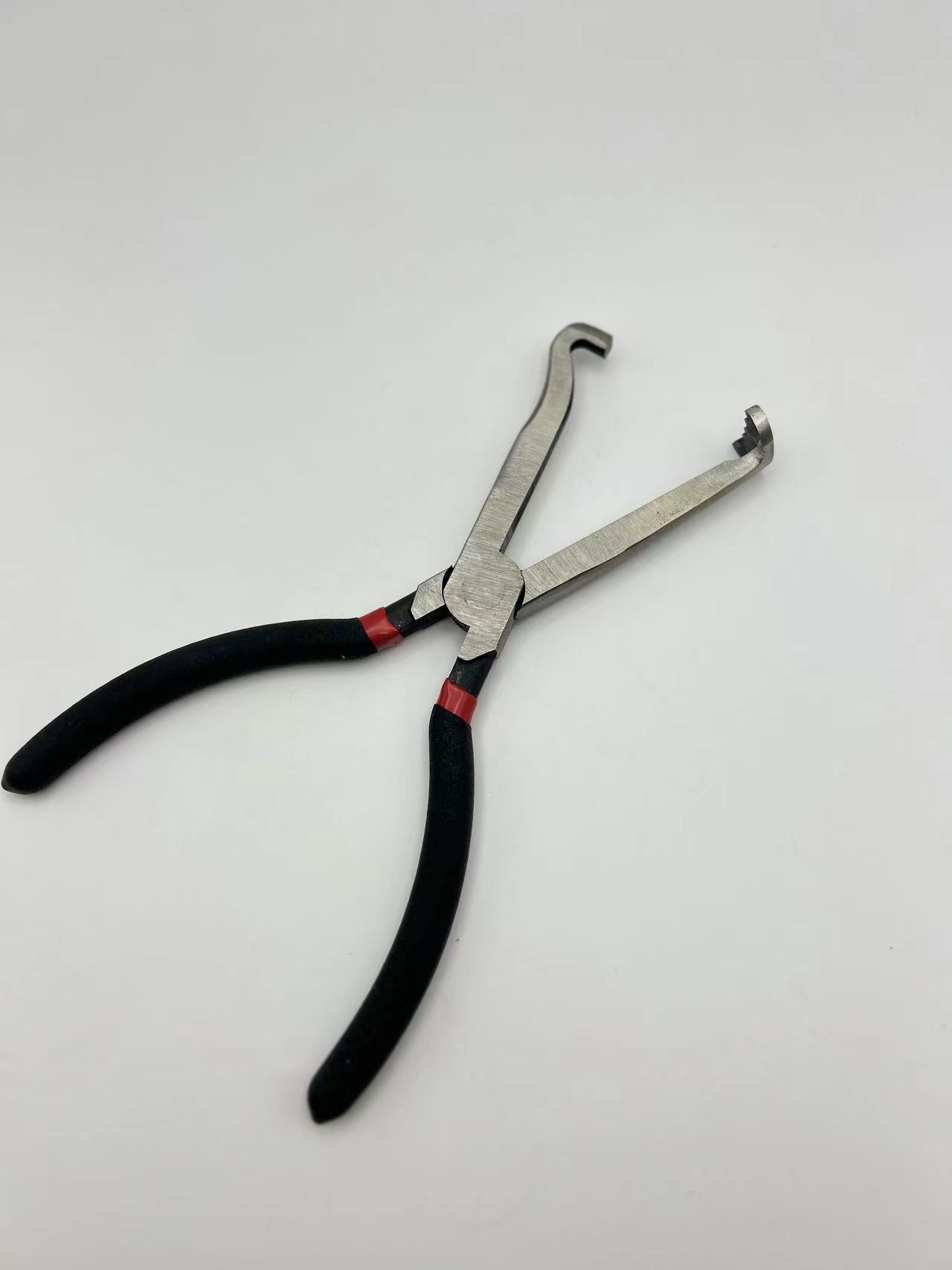
Walk into any busy manufacturing plant, and you will notice a common sight at every maintenance station: a well-organized pliers set containing multiple jaw configurations and cutting options. Maintenance teams rarely reach for a single-purpose tool when a multi-type pliers set can handle everything from gripping rounded bolts to snipping cable ties and forming sheet metal. After spending years observing maintenance routines in automotive, packaging, and metal fabrication facilities, the preference for multi-type sets is clearly not a coincidence—it is a calculated decision driven by efficiency, space constraints, and the unpredictable nature of daily breakdowns. This article unpacks the practical reasoning behind that industry-wide choice.
One tool set, countless repair scenarios
Factory equipment is diverse—pneumatic cylinders, conveyor rollers, electrical cabinets, hydraulic hoses, and structural frames all need regular attention. A single-style pliers set simply cannot cover that range. A combination pliers set that includes long-nose, diagonal-cutting, locking, and water-pump variants allows maintenance staff to transition from loosening a corroded air-line fitting to extracting a broken snap ring without running back to the tool crib.
A maintenance lead at a food-processing plant once shared that before they adopted a standardized multi-type pliers set, their mechanics carried three separate pouches for different plier styles. That added weight and wasted time. After consolidating into a single, well-curated pliers set with eight common profiles, the average repair response time dropped by nearly 18%. That might not sound dramatic, but over a year, it added up to over fifty saved man-hours—time that was redirected to preventive maintenance. The takeaway is simple: variety in a pliers set directly translates to agility on the floor.
Inventory simplification and cost control
Procurement departments love multi-type pliers set for a different reason: inventory efficiency. Ordering one comprehensive pliers set per workstation is far simpler than tracking individual models, reordering specific types, and managing backorders for popular profiles. When a factory stocks a standardized pliers set that contains the most frequently needed variants, they reduce the number of SKUs they need to monitor.
Consider a mid-sized assembly plant with 20 maintenance stations. If each station needs four plier types independently, that is 80 separate line items to manage. With a pre-configured pliers set containing all four, that shrinks to just 20 line items. The administrative overhead drops, and the risk of running out of a critical type diminishes. Additionally, suppliers often offer volume discounts on complete pliers set kits, lowering per-unit cost compared to buying individual tools. One purchasing manager reported a 12% reduction in annual tooling expenditure after switching to a single multi-type pliers set per technician, because the bundled pricing and reduced reordering costs offset the slightly higher upfront investment.
| Procurement Metric | Single-Type Pliers (per station) | Multi-Type Pliers Set (per station) |
|---|---|---|
| Line items to manage | 4 separate SKUs | 1 SKU (the set) |
| Annual reorder complexity | High (track each type individually) | Low (reorder the complete set) |
| Unit cost (average) | $12–$18 per piece | $40–$55 for the whole set (equiv. $10–$14 per tool) |
| Stock-out risk | Higher for popular types | Lower—everything comes together |
Training consistency and operator familiarity
A lesser-discussed advantage of the multi-type pliers set is its impact on training and skill transfer. When every maintenance technician uses the same pliers set with identical handle colors, pivot locations, and gripping characteristics, the learning curve for new hires shortens. They do not have to adapt to different lever ratios or jaw geometries from various brands—they learn one family of tools and apply that knowledge across all tasks.
An engine remanufacturing facility adopted a uniform pliers set across all shifts and noted that the time to certify a new mechanic dropped from three weeks to just under two. The consistency reduced confusion, and because the pliers set included clear labels on each tool, even temporary workers could quickly identify the correct plier for hose clamps versus electrical terminals. In high-turnover industries, that reduction in training time directly lowers operational costs and minimizes errors during the crucial learning phase. The multi-type pliers set becomes a silent mentor, guiding the user through each task with familiar ergonomics.
Space-saving organization on mobile carts
Maintenance work rarely happens in one fixed spot. Technicians roll carts or carry tool bags to the point of failure. A bulky collection of individually packaged pliers takes up excessive drawer space and makes it harder to keep tools organized. A compact, foam-fitted pliers set with designated slots for each profile not only protects the tools from impact but also makes missing tools immediately visible—a critical safety feature in industries where lost tools can become foreign-object debris.
During a tour of a large injection-molding plant, the maintenance supervisor proudly opened a cart drawer to reveal a neatly arranged pliers set with shadow-board inserts. He explained that the organized set cut his daily tool-check time from ten minutes to under three. The foam cutouts also prevented the pliers from rattling during transport, reducing wear on the pivot joints. Factories that value lean principles and 5S organization naturally gravitate toward a curated pliers set because it simplifies visual management. When every tool has a home, misplaced items are spotted instantly, and downtime caused by searching for tools plummets.
Durability across different applications
Skeptics might argue that a multi-type pliers set sacrifices specialized performance for convenience. In practice, however, quality manufacturers engineer each profile within the set to meet the specific demands of its intended task—without compromising overall toughness. For instance, the long-nose pliers in a good pliers set will have fine, serrated tips for precision bending, while the diagonal cutters will have induction-hardened edges for clean wire slicing. The locking pliers will feature a robust adjustment screw for clamping force control.
A case study from a heavy-equipment dealer compared the lifespan of a multi-type pliers set from a single source against a collection of best-in-class single-purpose tools from different brands. After two years of daily use, the multi-type pliers set showed only slightly more wear on the cutting edges—and far less pivot slop—than the specialized equivalents. The reason: the manufacturer had applied consistent heat treatment and material specifications across the entire set, ensuring that no tool was the weak link. In contrast, the mixed-brand collection had one pair that rusted prematurely and another that developed side play, forcing early replacement. So, a well-designed multi-type pliers set can actually outlast a mishmash of individual tools because it benefits from unified quality control.
| Performance Metric | Mixed Single-Type Tools (different brands) | Unified Multi-Type Pliers Set |
|---|---|---|
| Cutting edge retention | Varies widely (poor on cheaper ones) | Consistent across all cutters |
| Pivot joint durability | Some develop play within months | Uniform tolerance, longer lifespan |
| Corrosion resistance | Inconsistent coatings | Same coating process for all |
| Overall replacement rate | High (replace weakest link often) | Lower (replace whole set less frequently) |
The hidden value of after-sales support
When a factory invests in a multi-type pliers set from a reputable supplier, they gain more than hardware—they gain a support relationship. Suppliers that produce comprehensive pliers set kits typically offer clearer warranties, easier replacement policies, and technical advice on which set configuration suits specific industries. That level of service is harder to obtain when buying individual tools from multiple vendors.
A production engineer noted that their previous practice of purchasing various pliers from different sources created a paperwork nightmare when warranty claims arose—each brand had different return procedures. After consolidating to a single-source pliers set, they simply sent the entire set back for inspection if an issue occurred, and the supplier handled it with one return authorization. That streamlined process saved administrative time and improved the workshop’s trust in the brand. For factories that run round-the-clock operations, knowing that support is just a phone call away—and that the pliers set is backed by a responsive team—offers peace of mind that goes beyond the tool itself.
Why Jusheng delivers the maintenance set that factories trust
Across all these dimensions—versatility, inventory efficiency, training consistency, organization, durability, and support—the choice becomes clear. A multi-type pliers set is not a luxury; it is a strategic asset for any factory serious about minimizing downtime and maximizing technician effectiveness. Zhangjiagang Jusheng Tools Co., Ltd. has built its offering around this very philosophy. With a product range that exceeds 870 types, Jusheng understands that maintenance departments need reliable, matched sets that perform uniformly. Their 1,500-square-meter facility and team of 87 dedicated professionals enable rigorous quality control across every pliers set they produce. The company’s extensive sales network, reaching 18 countries and regions, demonstrates their commitment to global service standards. When a factory chooses Jusheng’s multi-type pliers set, they are not just buying tools—they are partnering with a manufacturer that anticipates the daily challenges of industrial maintenance and delivers solutions that hold up under pressure. That is precisely why more and more maintenance managers are standardizing on Jusheng’s sets, knowing that every tool in the box is built to the same high standard, ready for whatever breakdown comes next.