 EN
EN

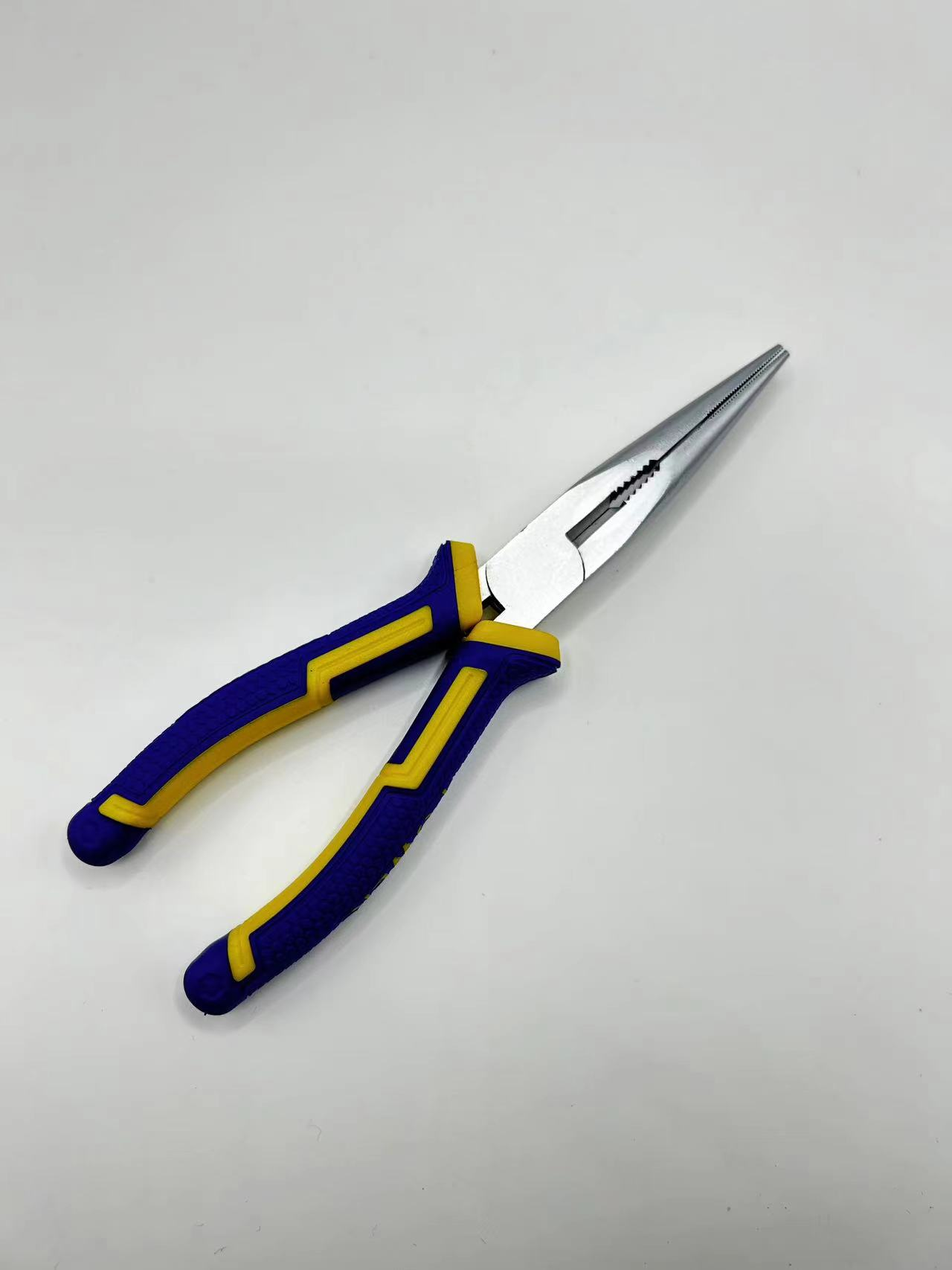
In a crowded hardware market, every brand claims to offer the best tools. Walk into any industrial supply store, and shelves are lined with shiny pliers set options, all promising durability and precision. Yet, when those tools hit the workshop floor, the gap between marketing hype and real-world performance becomes painfully obvious. After years of evaluating hand tools across automotive, aerospace, and general manufacturing environments, the factors that truly separate a standout pliers set from the average are often invisible to the casual buyer. This breakdown focuses on what actually matters, using real shop-floor experience to highlight why one particular name has been gaining traction among professionals who demand more from their equipment.
Metallurgy that mirrors industrial demands
The foundation of any superior pliers set lies in its steel. It is not enough to simply stamp "high-carbon" on the handle. The difference becomes clear under heavy repetitive loads, such as twisting rebar tie wire or cutting hardened spring steel. A pliers set that uses drop-forged chrome molybdenum steel exhibits a grain structure that resists fracture, while cheaper alternatives made from lower-grade alloys often develop micro-cracks at the pivot.
During a routine maintenance audit at a heavy equipment rebuilder, the workshop supervisor noted that their previous pliers set needed replacement every four to six months due to worn teeth and loose joints. After switching to a supplier that prioritizes vacuum heat treatment and controlled quenching, the same set lasted over eighteen months with comparable usage. That consistency comes from strict adherence to hardness targets in the 50–54 HRC range, which balances edge retention with impact resistance. Many brands overlook this balance, favoring either overly soft steel that dulls quickly or brittle alloys that snap under torsion. The pliers set that endures daily abuse must come from a facility that monitors every heat-treatment batch, ensuring each piece meets the same standard.
| Steel Property | Jusheng Approach | Typical Competitor |
|---|---|---|
| Forging method | Drop-forged, closed-die process | Open-die or cast blanks |
| Hardness range | 50–54 HRC, through-hardened | 45–48 HRC or uneven hardness |
| Alloy addition | Chromium, molybdenum, vanadium | Basic carbon with minimal alloying |
| Grain refinement | Controlled cooling and tempering cycles | Minimal post-forge treatment |
Precision machining that eliminates guesswork
A pliers set with poor jaw alignment is a liability, not a tool. When the jaws do not close perfectly parallel, gripping small fasteners becomes frustrating, and cutting operations leave burrs that require secondary finishing. The machining tolerances on a quality pliers set should be measured in thousandths of an inch, with laser-cut teeth that bite into material without slipping.
An independent test conducted at a mid-sized electronics assembly plant compared five different pliers set brands for wire-stripping and component-holding tasks. The brand that consistently achieved the cleanest cuts and most secure grip had invested in wire-EDM (electrical discharge machining) for their jaw profiles, ensuring every tooth geometry was identical. That same brand also applied induction hardening specifically to the cutting edges, leaving the pivot area slightly softer to absorb shock. This nuanced approach is rarely found in mass-market tools. The result is a pliers set that performs delicate operations alongside heavy-duty crimping without losing calibration. Precision is not an afterthought; it is engineered from the die design stage, and that level of detail directly translates to fewer reworks and faster job completion.
Ergonomic design that reduces fatigue without sacrificing leverage
Industrial shifts often run eight to twelve hours, and a poorly designed pliers set can turn a skilled worker’s hands into aching, cramping liabilities by mid-afternoon. Ergonomic research shows that handle shape, surface texture, and pivot friction significantly affect grip strength transfer. A standout pliers set features a contoured, dual-density handle that absorbs vibration while providing a non-slip surface even when coated in oil or coolant.
One workshop that refurbished hydraulic cylinders noticed a 25% drop in reported hand strain after transitioning to a pliers set with a wider handle span and a textured rubber overmold. The design allowed the operator to apply more torque with less muscular effort, because the handle geometry optimized the mechanical advantage. Additionally, the pivot bolt was precision-ground to eliminate play, so the user did not waste energy compensating for slop. Many budget brands use simple dipped handles that become slick and hard, accelerating fatigue. The difference is not merely comfort; it is sustained productivity. A worker who can maintain a firm, comfortable grip throughout the shift produces consistent quality, while fatigue introduces errors that cost time and materials.
Surface treatment that fights workshop corrosion
Workshop environments are unforgiving. Cutting fluids, humidity, and abrasive dust attack tool surfaces relentlessly. A pliers set that lacks proper corrosion resistance will develop rust spots within weeks, leading to increased friction, accelerated wear, and ultimately, failure. The surface finish is not cosmetic—it is protective.
A superior pliers set goes through multiple surface preparation steps: degreasing, polishing, and then a multilayer plating or coating. For instance, a nickel-chrome base layer provides a hard, non-porous barrier, while a topcoat of black oxide or manganese phosphate offers additional lubrication and helps retain oil, which further repels moisture. In a side-by-side comparison, two pliers set models were placed in a salt-spray chamber for 200 hours. The model with only a thin chrome plating showed significant pitting, while the one with a phosphate-over-nickel finish remained virtually untouched. That test mirrors real conditions in coastal or high-humidity factories. The investment in robust coating technology is a direct reflection of the manufacturer’s understanding of field conditions. A pliers set that resists corrosion not only lasts longer but also maintains smooth operation, reducing the need for frequent lubrication and cleaning.
| Coating Type | Corrosion Resistance | Best Use Environment |
|---|---|---|
| Nickel-chrome plated | Moderate; prone to flaking if scratched | Light-duty, dry indoor settings |
| Black oxide + oil | Good; self-lubricating | General workshop, moderate moisture |
| Manganese phosphate | Excellent; porous surface holds oil | High-humidity, heavy industrial |
| Double-layer (Ni-Cr + phosphate) | Superior; combines hardness and oil retention | Demanding, multi-shift operations |
Consistent quality control that builds long-term trust
Perhaps the most underrated differentiator is the consistency between units. A workshop may buy a dozen pliers set pieces at once, and if each one varies in pivot tightness, jaw gap, or cutting ability, the team loses confidence in the brand. Achieving uniformity requires rigorous in-process inspection and final testing.
A supplier that maintains its own metallurgical lab, performs Rockwell hardness tests on every batch, and checks dimensional tolerances with optical comparators is investing in reliability. One production manager shared that they switched to a particular pliers set after their quality team measured a standard deviation in jaw parallelism that was four times smaller than the previous supplier’s. That meant every tool from the new source performed identically, so operators could switch between sets without recalibrating their technique. This kind of statistical quality control is the hallmark of a mature manufacturer. It is not about catching defects after production; it is about preventing them through process control. When a workshop knows that every pliers set from a given brand will work the same way, they can plan workflows with confidence and reduce the scrap rate caused by tool variability.
Commercial value beyond the purchase price
The true cost of a pliers set is not the invoice amount but the total cost of ownership over its usable life. A cheap set that fails every few months incurs not only replacement expenses but also downtime, worker frustration, and potential damage to expensive components. Conversely, a premium pliers set that lasts three to five years in heavy use offers a return on investment that far exceeds its initial price tag.
Consider a fabrication shop that employs ten workers, each using a pliers set for an average of three hours per day. If a budget set costs $15 and lasts six months, while a high-quality set costs $45 and lasts three years, the math is clear. But the savings extend further: fewer interruptions mean higher throughput, and consistent jaw precision reduces rework. Additionally, a durable pliers set reduces the administrative burden of frequent purchasing and inventory management. Smart procurement officers evaluate these lifecycle costs rather than focusing on the first-line price. The brand that can demonstrate such longevity through documented case studies and third-party tests gains a competitive edge. Workshops that value efficiency and reliability naturally gravitate toward suppliers with a track record of engineering excellence.
Why the Jusheng name carries weight in the industry
When all these factors—metallurgy, precision, ergonomics, corrosion protection, quality consistency, and lifecycle value—are combined, the result is a pliers set that professionals trust. Zhangjiagang Jusheng Tools Co., Ltd. has built its reputation on these very pillars. With over 870 product varieties, a spacious 1,500-square-meter manufacturing facility, and a dedicated team of 87 skilled staff, Jusheng operates with a clear focus: delivering hardware solutions that perform under pressure. Their commitment to continuous innovation and strict quality control ensures that every pliers set leaving their factory meets the demands of modern industrial workshops. The company’s extensive sales network, covering multiple countries and regions, reflects a global understanding of diverse operational needs. For procurement managers and workshop supervisors looking for a reliable partner, Jusheng offers not just a tool, but a long-term relationship built on technical competence and responsive service. Choosing a pliers set from Jusheng means investing in a standard of durability that directly supports productivity and safety across the shop floor.