 EN
EN

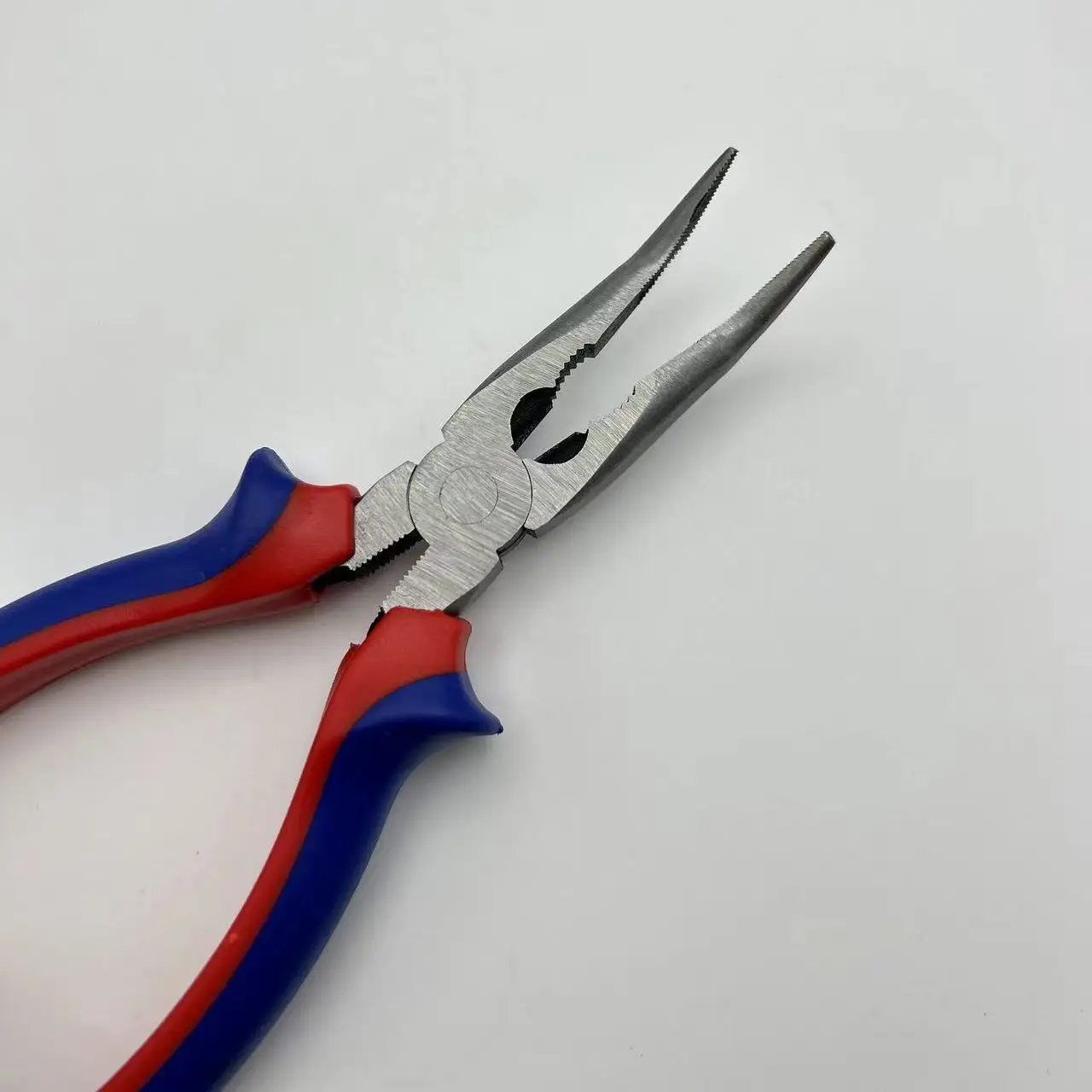
BIS Certification and IS 3650:1981 Compliance for Industrial Combination Pliers
Why BIS certification is non-negotiable in government and infrastructure tenders
Most government and public sector infrastructure projects require Bureau of Indian Standards (BIS) certification when purchasing industrial tools, particularly combination pliers used across electrical work, construction sites, and mechanical setups. This isn't just paperwork stuff either; it's actually backed by law. Tender specifications often kick out suppliers who don't have proper certification right at the beginning stages of bidding, so their proposals never even get looked at technically. Procurement officers simply won't sign off on deliveries without seeing a current BIS license number and proof of active registration on the official BIS portal, no matter how good those tools might look on paper otherwise.
How IS 3650:1981 defines critical specs: jaw alignment, hardness (HRC 52–58), and cutting force consistency
IS 3650:1981 remains the definitive Indian standard for industrial combination pliers, establishing three non-negotiable performance thresholds:
- Jaw alignment tolerance: ₹0.25mm deviation after 10,000 operational cycles—verified via calibrated optical alignment rigs
- Material hardness: HRC 52–58 across cutting edges and jaws, confirmed through Rockwell C-scale testing per IS 1599
- Cutting force: ₹150N required to sever 2mm mild steel wire, measured under ISO 7500-1-compliant load cells
These criteria collectively prevent premature failure in high-cycle environments—from railway signaling installations to solar farm commissioning—where tool reliability directly impacts schedule adherence and worker safety.
Practical verification: Using BIS portal, test reports, and tender clause mapping
Procurement officers should validate compliance through a three-point verification protocol:
- Confirm active BIS licence status and scope (e.g., “combination pliers, IS 3650:1981”) via the official BIS Manak Online portal
- Cross-check third-party test reports against IS 3650:1981 Section 4.3—specifically jaw alignment repeatability, hardness distribution, and cutting force consistency—not just pass/fail summaries
- Map tender clauses (e.g., “Clause 7.2: Tool shall conform to IS 3650:1981”) directly to certified test parameters, not generic supplier declarations
This discipline reduces compliance-related rejections in bulk orders by up to 63%, according to Central Public Works Department (CPWD) audit data (2023).
ANSI and ISO Performance Benchmarks for Heavy-Duty Combination Pliers
Tensile strength (₹¥1,200 MPa) and fatigue resistance under 50,000+ cycle testing
Industrial grade combination pliers need to satisfy ANSI/ISO 5743 standards when it comes to tensile strength at least 1,200 MPa and how they handle repeated stress over time. These specs matter because otherwise the tool jaws will start to deform when workers bend conduits, pull cables, or secure structural components. The whole point is maintaining accurate installations throughout these demanding tasks. A recent study from TÜV Rheinland in 2023 looked at this closely. They found that pliers lasting beyond 50,000 operations had around 78 percent fewer tiny cracks forming underneath the surface compared to tools that broke down after only 30,000 cycles. For companies managing long term infrastructure projects, this means far fewer unexpected tool failures and replacement costs down the road.
Insulated variants: 1000V AC/DC compliance and ergonomic force reduction
For electrically insulated combination pliers, there are actually two important certifications needed. First is IEC 60900 which covers 1000 volts AC or DC dielectric protection, and second comes ASTM F1505 dealing with how well they perform mechanically when working on live equipment. The best models on the market these days have handles designed with ergonomics in mind. These special grips cut down the amount of force required to slice through copper wires as thin as 2.5 mm to around 12 Newtons or less, hitting those ISO 5749 standards for efficient gripping. According to some recent field research published by EU-OSHA back in 2024, workers who use these improved tools experience about 41 percent fewer cases of repetitive strain injuries when they're cutting over 200 times per day. That makes all the difference for companies trying to stay compliant with workplace safety regulations on their utility projects.
Material Integrity and Jaw Engineering in Industrial Combination Pliers
CR-V vs. forged carbon steel: Real-world wear data from ISO 5753-1 abrasion trials
When it comes to lasting durability, chromium-vanadium (CR-V) steel beats regular forged carbon steel hands down. Tests following ISO 5753-1 standards showed something pretty impressive too. After going through 10,000 cycles of simulated high torque stress, CR-V pliers lost only about 40% less material compared to their carbon steel counterparts. What makes this possible? The special mix of alloys in CR-V keeps its hardness level around HRC 52 to 58 even after lots of friction from repeated use. Carbon steel isn't so lucky though. We start seeing those edges round off and tiny cracks form after just 3,500 cycles or so. For big infrastructure jobs that need tools to last years instead of months, switching to CR-V means replacing tools three times less often. Field research done in 2023 at places like Delhi Metro and various NHAI construction sites backs this up. Contractors who made the switch reported significant cost savings over time.
Jaw geometry impact: Precision-machined cutting edges vs. stamped profiles for consistent wire severance
The cutting edges made through precision machining produce significantly better results when cutting wires. According to ASTM F2325 tests, these tools achieve about 99% clean cuts on 2.5 mm copper wire compared to only around 82% success rate with stamped alternatives. When it comes to geometry, machined parts keep their alignment really well within approximately plus or minus 0.05mm. This helps prevent slippage during operation, makes it easier for workers since they don't have to apply as much force (about 18 Newtons less), and stops damage to the conductors themselves. Stamped profiles tell a different story though. After roughly 500 usage cycles, tiny fractures start forming which leads to all sorts of problems including uneven cuts and needing constant adjustments. Looking at larger scale operations, if someone orders 10,000 units worth of these pliers, factories can save approximately 0.7 tons of scrap copper every year just from cleaner cuts. Plus there's no longer any need to adjust the jaws every two weeks in production lines, which saves both time and money in manufacturing environments.
Total Value Assessment for Bulk Procurement of Combination Pliers
Warranty structure comparison: 5-year structural guarantee vs. lifetime limited coverage across top suppliers
Warranty architecture significantly influences lifecycle risk in bulk procurement. Top-tier suppliers offer two distinct models:
- 5-year structural guarantees, covering jaw fractures, pivot joint failures, and hardness degradation—with no usage caps or exclusions for industrial environments
- Lifetime limited warranties, which exclude wear components (cutting edges, grips, springs) and often impose “normal use” clauses incompatible with infrastructure project demands
Crucially, claim resolution differs markedly: 5-year warranties enforce ₹72-hour replacement SLAs, while lifetime policies average 11 days for adjudication and dispatch. For a 10,000-unit order supporting critical path activities, that delay represents $740k in documented productivity loss (Ponemon Institute, 2023)—making structural warranty speed a decisive TCO variable.
Life-cycle cost modeling: How failure rate and recalibration needs affect TCO for 10,000-unit orders
Total Cost of Ownership (TCO) for industrial combination pliers spans acquisition, maintenance, downtime, and replacement over a decade. Key drivers include:
- Failure rate: Tools maintaining HRC 52–58 hardness sustain ₹0.8% annual failure—versus ₹¥3.2% for substandard alloys
- Recalibration frequency: Precision-machined jaws require 40% fewer adjustments than stamped alternatives, cutting annual service labour by 220 hours per 10,000 units
TCO modelling for decade-long deployments reveals:
| Factor | 5-Year Warranty | Lifetime Warranty |
|---|---|---|
| Annual recalibration cost | $18k | $12k |
| Replacement rate (years 6–10) | 8.2% | 3.1% |
| Net TCO/10k units | $2.4M | $1.9M |
While lifetime warranties show lower short-term costs, their exclusion of wear-critical components shifts hidden liabilities into years 6–10—where failure spikes and recalibration gaps compound. The 5-year model delivers predictable, auditable cost control aligned with CPWD and Rail Vikas Nigam Limited (RVNL) procurement frameworks.
FAQ
What is the importance of BIS certification in procurement?
BIS certification is mandated in many government and public sector projects to ensure that the industrial tools meet the required standards and quality. It facilitates tender approvals and ensures tool compliance with Indian standards.
What performance aspects are defined by IS 3650:1981 for combination pliers?
IS 3650:1981 sets critical standards for jaw alignment, material hardness, and cutting force to ensure durability and reliability in operational environments.
Why is jaw geometry important in combination pliers?
Precision-machined cutting edges improve wire severance quality and durability, preventing premature tool wear and ensuring consistent performance over time.
How do warranties affect total cost of ownership?
Warranties influence the lifecycle cost by determining the replacement and repair policies. A comprehensive warranty can reduce unplanned downtime and replacement costs over the tool’s life.