 EN

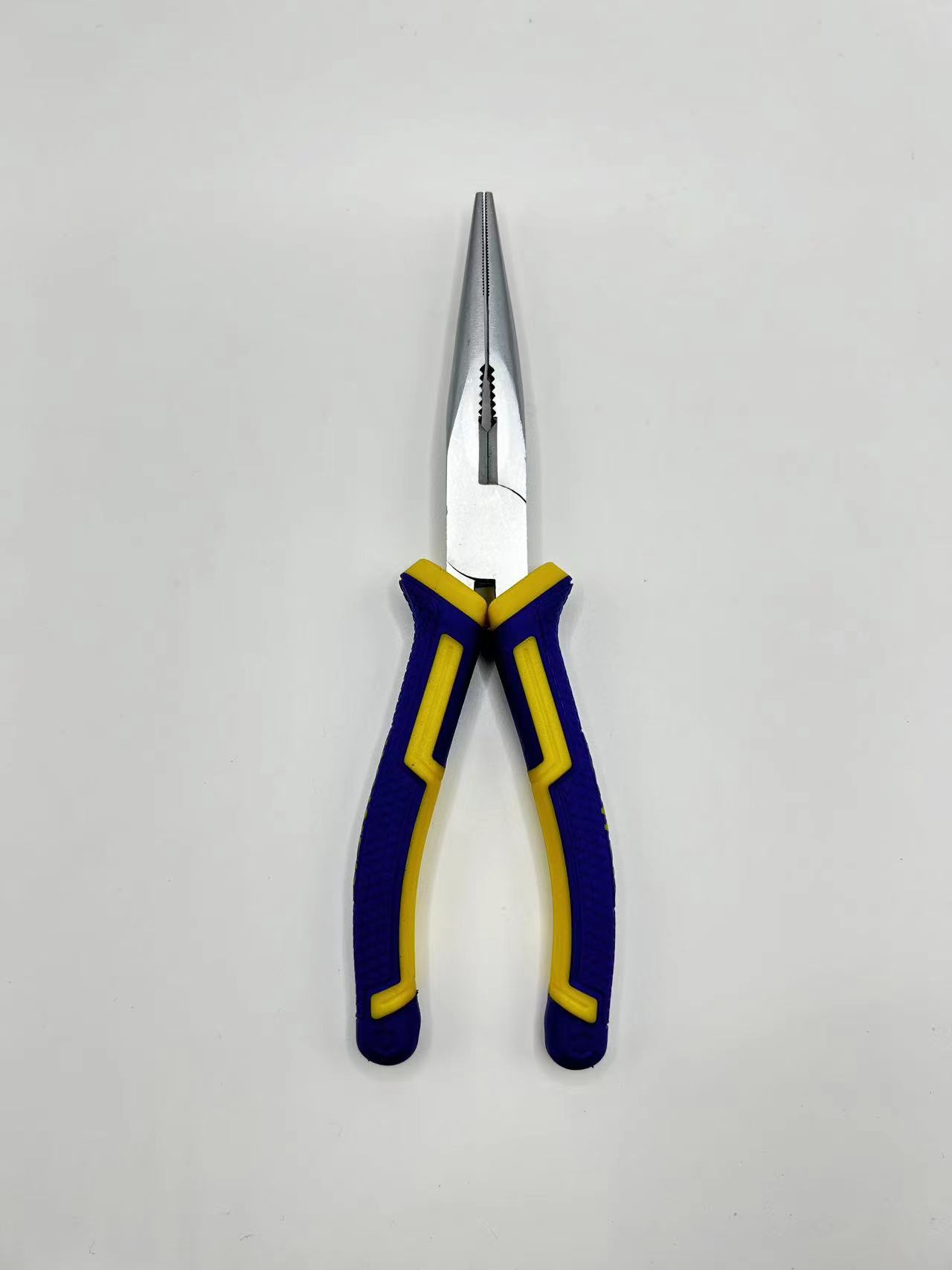
Selecting the right gripping hand tool for a maintenance team often comes down to one practical question: where will the tool be used most often? Water pump pliers sit in a distinct category because the adjustable, multi-position jaw lets a single instrument cover a wide range of diameters and shapes. For distributors, electricians and MRO buyers, that versatility means fewer SKUs on the shelf and faster work on site. The design looks simple, yet the working principle behind it explains why this tool earns a permanent place in so many industrial kits and service vans.
Plumbing and pipework scenarios
Tightening and loosening nuts on supply lines
Plumbing crews reach for water pump pliers when a basin nut, compression fitting or soft-copper connection resists a standard wrench. The multi-position jaw steps along the pivot, so the same tool grips a 10 mm coupling and a 32 mm trap without swapping instruments. Jaw geometry with fine serrations converts hand torque into a secure hold on rounded, chrome-plated nuts that have been over-tightened or corroded. A wide grip span keeps knuckles clear of sharp ends. In one procurement case, a regional MRO distributor swapped three fixed wrenches for adjustable gripping hand tools across its plumbing kits and reported fewer missed fittings. A drop-forged chrome vanadium steel body resists the tensile load that builds when a fitting seizes, lowering the risk of jaw spread and a sudden slip that damages the joint.
Holding and turning smooth pipe without crushing it
When a smooth plastic or copper pipe must turn but not score, the curved jaw profile spreads pressure over a broad area. Slip-joint and needle-nose variants would bite the surface; the wider multi-grip jaw of this tool distributes the load instead. Anti-slip serrations keep the pipe from rotating under torque while protecting the finish, which matters for potable-water lines where a crushed wall invites leaks that fail inspection. Corrosion resistance on the joint pins keeps the pivot moving after repeated wet use, exactly where cheaper tools stiffen. Inspect the jaw teeth for wear and wipe debris after each job to preserve the bite and extend service life.
Automotive maintenance scenarios
Removing and refitting coolant and radiator hoses
In the automotive bay, rubber hoses bond to metal spigots after years of heat cycling. Water pump pliers give the broad, even grip needed to break that bond without tearing the hose. The adjustable jaw closes on a swollen hose end, and the user works it free with a controlled rocking motion. Compared with bare hands, the tool multiplies torque while keeping fingers from hot surfaces and sharp fan edges. Drop-forged CR-V steel holds its edge and shape under repeated loads, so the jaw does not drift open after a season of use. Replace hoses promptly once the tool shows heavy scoring on the rubber to avoid hidden cracks that later fail under pressure.
Loosening stuck hose clamps and filters
Spring and band clamps often seize from road salt. Water pump pliers lock onto the clamp ears at the correct span, letting the technician squeeze and rotate without the clamp slipping. For canister filters with a crimped band, the wide jaw gives purchase that slip-joint pliers cannot match. The principle is straightforward: a larger jaw opening plus a self-locking pivot converts modest hand force into high clamping pressure. Inspect the pivot joint often; a loose rivet cuts the mechanical advantage and risks sudden release under load, a common but avoidable failure. Light oil on the pivot keeps the adjustment smooth and the jaw geometry true through a long service life.
Gripping round, flat and irregular objects
Securing round and flat stock
Beyond pipe, the tool holds round bar, conduit, threaded rod, flat stock and square nuts. Water pump pliers centre round work with concave jaw faces so it cannot roll, while induction hardening on the contact teeth keeps bite after thousands of cycles. Hardness around HRC 50 to 58 on quality CR-V steel stops edges flattening under shock. Expertise matters here: a jaw too soft deforms, one too hard turns brittle and chips. ISO 5742 and ISO 5744 set the dimensional and hardness expectations buyers should request before a bulk order. ANSI hand-tool guidance also supports matching the tool to the task to limit repetitive-strain risk on the line.
Handling irregular or damaged fittings
Stripped, corroded or abused fittings lose their straight flats. Water pump pliers conform to irregular shapes with a wide, serrated multi-position jaw that finds purchase where a wrench slides off. This prevents the dangerous shortcut of gripping with a cutting hand tool, which can nick and weaken the part. On site, a technician who cannot get a secure hold should stop and reassess rather than force the joint; sudden slips cause hand injuries and damaged parts. Routine care—wiping the joint, checking for play, light oil on the pivot—extends service life without special equipment. Keep insulated variants separate near live parts governed by OSHA 1910.335 and NFPA 70E.
Summary
For distributors, electricians and MRO buyers, the practical value of water pump pliers is the breadth of scenarios one SKU covers: plumbing nuts and pipes, automotive hoses and filters, plus round, flat or irregular grip jobs. The multi-position jaw is why one tool replaces several, and disciplined inspection keeps it safe in daily use. Choose drop-forged CR-V steel, verify hardness and dimensions against ISO 5742 to 5744, and keep insulated tools separate for live work under OSHA 1910.335 and NFPA 70E.
Frequently Asked Questions
Question
What makes water pump pliers different from an adjustable wrench?
Answer: The key difference is the jaw. An adjustable wrench grips only flat, parallel surfaces and slips on round stock. The tool uses a serrated, multi-position jaw that wraps around pipes, hoses and nuts, gripping by friction and shape rather than flats alone. The push-button pivot lets the user change the opening with one hand. For rounded or corroded fittings this prevents rounding and slip risk with a wrench.
Question
Why does the multi-position jaw matter for plumbing work?
Answer: Plumbing involves many diameters, from 10 mm supply couplings to 32 mm traps. A fixed wrench cannot cover them all. The multi-position jaw steps through several openings so one tool fits each size securely. This reduces the number of tools carried and speeds up under-sink jobs where swing room is limited. It lowers the chance of rounding a chrome nut by applying even, broad contact pressure instead of pinching at two points.
Question
How should buyers inspect these tools before purchase?
Answer: Check the pivot for side play and confirm the jaw locks cleanly at each position. Look for drop-forged chrome vanadium steel and a clean, even finish on the serrations. Verify hardness and dimensions against ISO 5742 and ISO 5744, and request documentation from the manufacturer. Examine the handle for cracks and the joint pins for corrosion. A tool that feels loose at the rivet will lose clamping pressure quickly under load.
Question
Can this tool replace slip-joint pliers in a kit?
Answer: In many grip tasks it can, because the wider jaw opening covers sizes that slip-joint pliers cannot reach. However, slip-joint pliers remain useful for light, frequent adjustments where a compact head helps. For plumbing, automotive hoses and large fasteners, the adjustable multi-position tool is the stronger choice. Keep both in an industrial kit so technicians match the instrument to the job rather than forcing one tool beyond its comfortable span.
Question
Which standards apply to industrial hand tools like these?
Answer: ISO 5742 and ISO 5744 cover pliers dimensions, hardness and test methods, while ANSI publishes complementary hand-tool safety guidance. For electrical-adjacent work, insulated variants should meet IEC 60900 for 1000 V live working, and workplaces follow OSHA 1910.335 and NFPA 70E for protective equipment. Buyers should request certificates and batch test reports. Specifying certified tools protects users and supports a defensible procurement record during audits.