 EN
EN

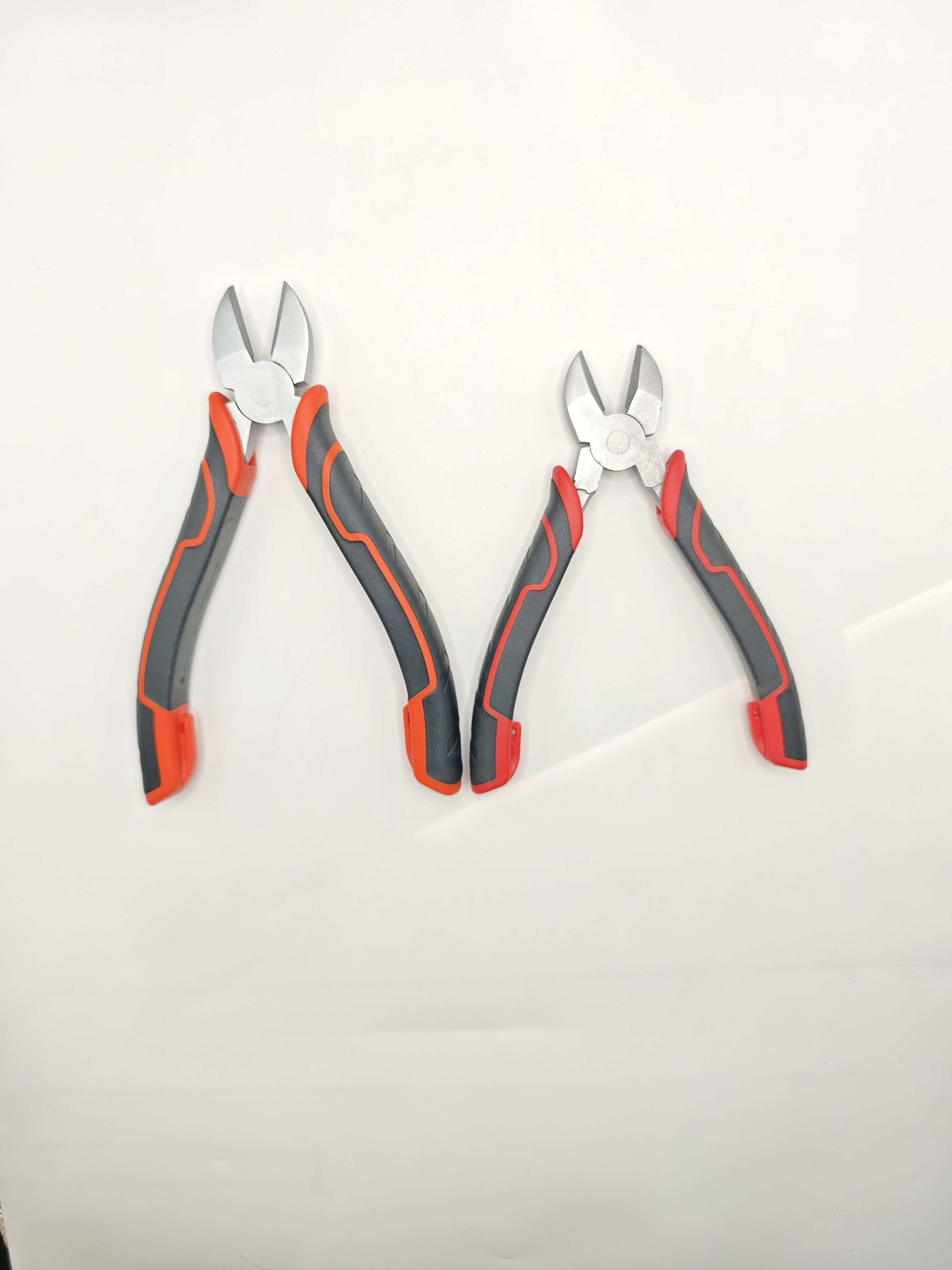
Match Plier Types to Essential Automotive Repair Tasks
Removing hose clamps and manipulating exhaust hangers with offset and locking pliers
Offset pliers give mechanics better access with their angled jaws, making them perfect for those tough to reach hose clamps buried in tight engine compartments. Locking pliers like Vise-Grips keep steady pressure on exhaust hangers when working on suspensions. These tools typically have about a 15 degree angle built in, so techs can actually get around radiator supports and all sorts of obstacles without having to keep moving their hands around, which cuts down on hand fatigue over long jobs. Shops that switched to these specialized offset pliers reported cutting down clamp replacement times by roughly 40 percent compared to regular straight jaw pliers according to some industry research from last year.
Handling brake springs and installing snap rings using internal and external circlip pliers
Internal circlip pliers work by expanding outward when seating those tricky brake caliper retention springs. The external versions do the opposite job, compressing snap rings during transmission assembly work. What makes these tools really valuable are their precision ground and hardened tips that stop damage to grooves. Damaged grooves are actually one of the main reasons for failures down the road. According to manufacturer technical documents, around seven out of ten problems with circlips can be traced back to incorrect installation techniques. Most quality sets come with interchangeable tips covering sizes from 3 millimeters all the way up to 19 mm. This range works great for everything from ABS sensor retainers right through to differential carrier rings in various automotive applications.
Cutting, stripping, and crimping wiring with diagonal, needle-nose, and dedicated crimping pliers
Electrical integrity starts with the right plier:
- Diagonal cutters with HRC 58+ hardened blades cleanly shear corroded battery cables and thick gauge wires without mushrooming.
- Needle-nose pliers, featuring tapered, serrated jaws, allow precise terminal bending inside cramped fuse boxes and ECU housings.
-
Dedicated crimpers with ANSI/UL-certified dies ensure gas-tight, deformation-free connections¬proper crimping reduces terminal failure rates by 25%.
For ECU harnesses, precision-ground stripping notches remove insulation cleanly, preventing conductor nicks that trigger intermittent faults.
Assess Core Performance Criteria: Precision, Strength, and Ergonomics
Jaw design fundamentals: serration pattern, width-to-task ratio, and coated-jaw protection for soft tubing
The shape of tool jaws really matters when it comes to both control during work and protecting components from damage. Fine tooth patterns with around 15 to 25 teeth per inch provide just enough grip for sensitive fuel line connections without leaving marks behind. Meanwhile, coarser designs featuring approximately 8 to 12 teeth per inch are better suited for grabbing hold of corroded exhaust parts that need attention. When selecting tools, matching jaw width to the job at hand is essential. The slender 3mm tip versions can access those hard to reach ABS sensor connections deep inside wheel wells where space is limited. On the other side of things, wider 15mm jaws offer stability when working with brake caliper pins that負受 loads during adjustment. For anyone dealing with hydraulic systems or brake lines specifically, nylon coated jaws make all the difference by preventing scratches on softer materials like copper or aluminum tubing. According to a recent study mentioned at last year's Ponemon Institute workshop on equipment reliability, these small details actually help save upwards of seven hundred forty thousand dollars annually in replacement costs for damaged fluid lines across various industries.
Material durability: HRC 54¬62 hardened steel, pivot tolerance under 0.05 mm, and heat-treatment verification
The durability over time really comes down to how serious we are about materials science. We use chromium vanadium steel that's been heat treated to around HRC 58, give or take a couple points. This stuff can handle well over 12 thousand compression cycles on those suspension springs before showing any sign of bending or warping, as tested through standard Rockwell methods according to ASTM E18 guidelines. The pivots themselves stay super tight, under 0.05 millimeters tolerance, so there's absolutely no wobbling when doing repetitive work such as crimping terminals repeatedly throughout the day. That means connectors stay properly secured every single time. And our induction hardening process follows ISO 898-1 requirements, which basically means the whole mechanism from jaws to pivot points maintains consistent strength throughout its construction.
| Performance Factor | Specification Threshold | Failure Risk Reduction |
|---|---|---|
| Hardness (HRC) | 54¬62 | 63% fewer jaw fractures |
| Pivot Tolerance | <0.05 mm | 41% less fastener rounding |
| Heat Treatment | ISO 898-1 certified | 57% lower fatigue failure |
Maximize Leverage and Reduce Technician Fatigue in Daily Use
Balancing mechanical advantage: handle length versus control in tight engine bay spaces
Mechanical advantage must be calibrated¬not maximized¬to the workspace. Longer handles increase torque for seized components (e.g., exhaust manifold bolts), but compromise clearance near firewall junctions or intake manifolds. Optimal sizing aligns tool dimensions with real-world constraints:
- Under-hood applications require handles ¤7 inches to sustain neutral wrist alignment and reduce ulnar deviation.
- High-torque tasks benefit from 10-inch handles only where space permits¬such as rear axle service or chassis-mounted components.
-
Brake-line and ABS fitting access favors compact 5¬6 inch pliers, enabling secure single-handed operation and cutting shoulder strain by 40% during repetitive work.
Forged steel construction with textured, non-slip grips maintains control when applying force at awkward angles. This deliberate balance directly improves output: technicians using correctly sized pliers complete 23% more repairs per shift and report 31% less hand fatigue, according to the 2023 Ergonomics in Auto Repair study.
FAQ Section
What are the advantages of using offset pliers?
Offset pliers have angled jaws that provide better access in tight engine compartments and reduce hand fatigue during long jobs.
How are circlip pliers used in automotive repairs?
Internal circlip pliers expand outward for installing brake caliper retention springs, while external pliers compress snap rings in transmission assembly work.
Why is jaw design important in pliers?
Jaw design determines grip and control during work, preventing damage to components, especially with sensitive connections like fuel lines.